We may earn a commission when you buy through links on this page, at no extra cost to you. How this works.
Home coffee often tastes thin, bitter, or flat - not because your technique is wrong, but because one weak link in your setup is holding everything else back. Most people assume they need to replace their entire coffee station to see real improvement, but that approach wastes money and rarely delivers the clarity you're hoping for.
The truth is simpler: upgrading one specific piece of equipment usually makes a bigger difference than replacing three mediocre tools at once. Fresh beans won't shine through a dull blade grinder. A capable grinder can't fix water that's too hot or too cool. And even perfect grounds lose their potential when extraction is inconsistent.
This guide walks through the single upgrade that delivers the clearest improvement for your current setup. You'll learn how to identify your weakest link, what each upgrade actually changes in the cup, and how to choose the right investment without second-guessing or overspending. The goal is better coffee tomorrow, not a drawn-out equipment wishlist.
How to Identify Your Bottleneck
- Using pre-ground coffee or beans older than two weeks? Upgrade to fresh whole beans first.
- Grinding with a blade grinder or using inconsistent grind size? A burr grinder is your next move.
- Already grinding fresh but guessing on coffee-to-water ratio? A scale will lock in consistency.
- Using good beans and a grinder but brewing method is limiting? Consider your brewer last.
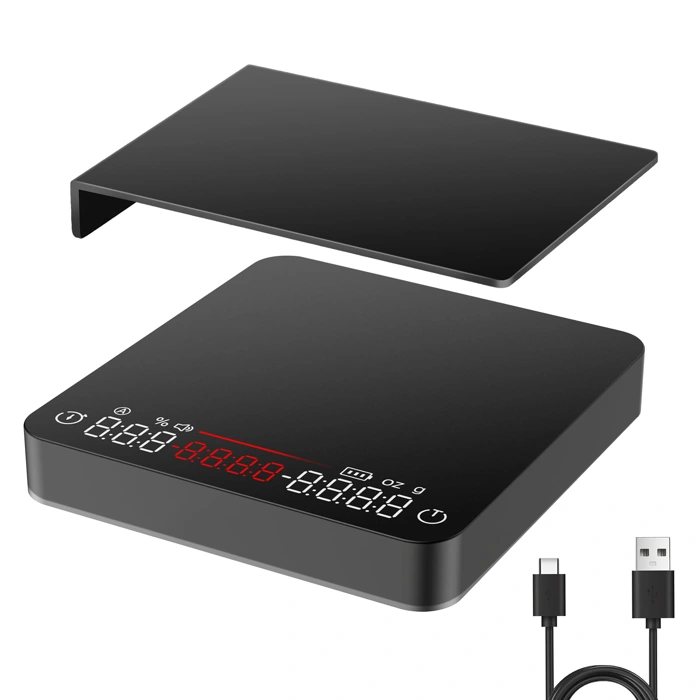
VABICA USB-C Rechargeable Coffee Scale with Timer for Espresso & Pour-Over (Black)
The VABICA USB-C Rechargeable Coffee Scale with Timer for Espresso & Pour-Over offers rechargeable convenience and a built-in timer at a budget-friendly $29.99 price point. If you already have a grinder but still eyeball your coffee and water measurements, this scale delivers a practical step forward without the cost of a grinder upgrade.
The USB-C charging reduces the hassle of swapping AAA batteries, and the integrated timer handles both pour-over and espresso workflows. The 4.7/5 rating reflects solid everyday reliability for dose tracking and ratio consistency. Build quality sits comfortably above disposable kitchen scales, though it won't match the durability or precision of higher-end brewing scales.
This works best for drip, French press, or beginner espresso setups where you want repeatable dosing without investing in a grinder yet. The timer helps you track bloom and total brew time for pour-over, and the USB-C port means you can charge from the same cable as your phone or laptop. If your current grinder already produces acceptable consistency, the VABICA scale brings measurement discipline that immediately tightens shot-to-shot variation.
However, if your grinder produces uneven particle size or your beans are stale, no scale will compensate for those upstream problems. The VABICA is a logical first upgrade when your grinder is adequate but your dosing and ratios are still guesswork.
- ✅ USB-C rechargeable - no battery swaps
- ✅ Built-in timer for pour-over and espresso
- ✅ $29.99 price point
- ✅ 4.7/5 rating for everyday reliability
- ⚠️ Won't fix problems caused by inconsistent grinding
- ⚠️ Build quality below premium brewing scales
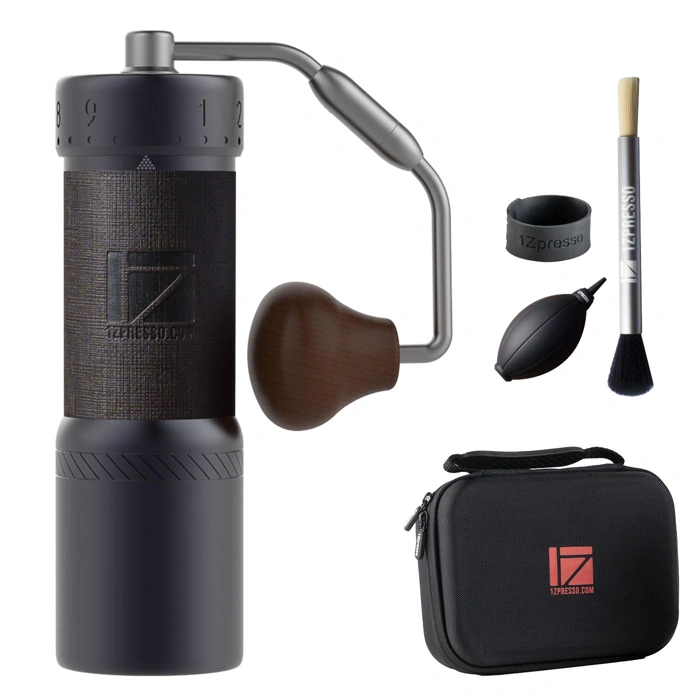
1Zpresso J-Ultra Manual Coffee Grinder with Conical Burr for Espresso (Iron Gray)
Switching from a blade grinder or pre-ground coffee to a quality burr grinder delivers the clearest improvement in cup quality, and the 1Zpresso J-Ultra Manual Coffee Grinder with Conical Burr for Espresso offers consistent grind size without the cost of an electric burr grinder. The conical burr design produces uniform particles that extract evenly, whether you're brewing espresso or pour-over, which translates directly to balanced flavor and less bitterness or sourness.
The J-Ultra's stepless adjustment system gives you precise control over grind size, letting you dial in espresso settings or shift to coarser grinds for other methods without limitation. Because it's manual, you'll spend multiple seconds grinding for a single shot or cup, which means this grinder fits best if you value grind quality and don't mind the physical effort. The build quality is solid, with an iron gray body that feels stable during use.
At $199.00, this grinder sits between budget hand grinders and entry-level electric burr models. You gain portability and quiet operation, but you trade speed and convenience. If you're moving up from inconsistent grinds and want immediate flavor improvement without spending on an electric grinder, the J-Ultra is a practical first upgrade that will scale with your skill as you refine your brewing technique.
- ✅ Conical burr delivers consistent grind size for even extraction
- ✅ Stepless adjustment allows precise dialing for espresso and other brew methods
- ✅ Solid build quality and stable during grinding
- ✅ Quiet and portable with no electrical requirement
- ⚠️ Manual operation requires 30 - 60 seconds of effort per dose
- ⚠️ Not ideal if speed and convenience are top priorities
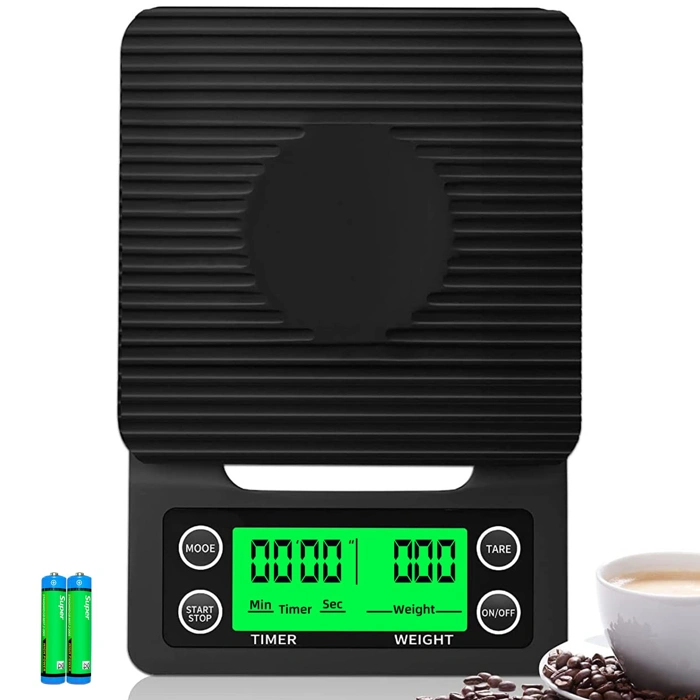
YONCON 3kg Coffee Scale with Timer for Espresso & Pour Over (Black)
If you already own a grinder and buy fresh beans but still struggle with consistency, measuring your coffee and water by weight is the simplest upgrade you can make. The YONCON 3kg Coffee Scale with Timer removes the guesswork from every brew, letting you lock in the ratios that work and repeat them reliably. At $9.99, this scale delivers the core functionality you need - accurate weighing up to 3 kg and a built-in timer - without asking you to invest in higher-priced models until you know exactly what you want from your setup.
The scale's compact footprint fits most pour-over drippers and handles the weight of a carafe or server without tipping. The integrated timer starts with a single press, so you can track bloom time, total brew duration, or espresso shot length without juggling separate devices. Response time is quick enough for pour-over work, and the readout is clear in typical kitchen lighting. Because it measures in multiple-gram increments, you can fine-tune grind dose and water volume to the level that actually affects flavor.
This scale works well for manual brewing methods where you control the pour, and it's light enough to move between counter and storage easily. The timer function is straightforward - no menus or complex button sequences - so you spend less time managing the tool and more time focusing on technique. If you've been scooping by volume or estimating water by eye, switching to weight-based measurement often delivers a clearer improvement than any other single change, especially when your grinder and beans are already in place.
The display sits flush with the platform, which keeps the profile low but means you need to lift your brewer slightly to read the weight during a pour if the vessel is wide. The scale runs on batteries, so there's no cord to route, but you'll want to keep spares on hand. For espresso workflows that involve fast puck prep and tight timing, the lack of auto-start or advanced flow-rate tracking means you'll rely on your own rhythm rather than automated cues.
At under ten dollars, the YONCON scale is the entry point for anyone ready to stop guessing and start dialing in. It won't replace a high-end barista scale with Bluetooth logging or rechargeable power, but it gives you the measurement precision and timing reference you need to make every other upgrade - grinder settings, water temperature, pouring technique - actually matter.
- ✅ Measures up to 3 kg in 0.1-gram increments for precise dosing
- ✅ Built-in timer starts with one press and tracks brew duration
- ✅ Compact, lightweight design fits most pour-over and espresso setups
- ✅ $9.99 price makes weight-based brewing accessible immediately
- ⚠️ Flush display requires lifting brewer to check weight mid-pour with wide vessels
- ⚠️ Battery-only power means no rechargeable option
- ⚠️ No auto-start or flow-rate tracking for advanced espresso workflows
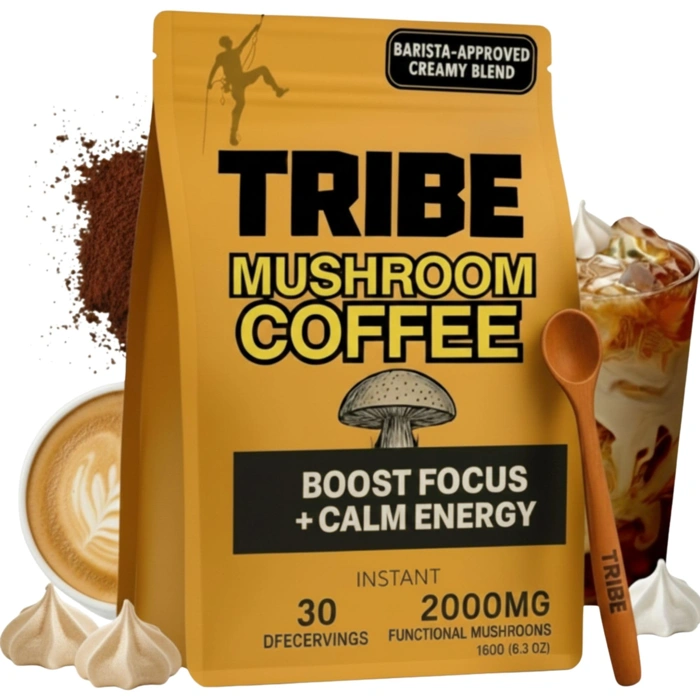
TRIBE Instant Mushroom Coffee with MCT Oil & Adaptogens (30 Servings)
If you want better-tasting coffee immediately without buying grinders, brewers, or scales, switching to a higher-quality instant option like TRIBE Instant Mushroom Coffee with MCT Oil & Adaptogens can deliver a noticeable step up from supermarket instant blends. This isn't a brewing upgrade - it's a consumable quality improvement that fits into the setup you already have.
TRIBE combines instant coffee with lion's mane mushroom, MCT oil, and adaptogens in single-serving stick packs. Each box includes 30 servings at $24.89, working out to roughly the listed amount per cup. The instant format means you add hot water and stir; no equipment, no technique, and no cleanup beyond a spoon and mug.
The flavor is smoother and less acidic than most mass-market instant coffees, with a mild earthiness from the mushroom extract. The MCT oil adds a hint of richness without needing milk or creamer, though you can still add either if you prefer. Because it dissolves fully in hot water, you won't deal with the gritty texture some budget instant coffees leave behind.
This option makes sense if your current routine relies on instant coffee and you're looking for better flavor and added functional ingredients without changing your workflow. It won't match the clarity or complexity of freshly ground beans brewed in a quality maker, but it's a straightforward way to improve what's in your cup right now. The stick-pack format also travels easily, so it works well for office or travel situations where brewing equipment isn't available.
With a 4.2/5 rating and in-stock availability, TRIBE offers a low-risk entry point for anyone prioritizing convenience and functional benefits over traditional brewing upgrades.
- ✅ Instant format requires no equipment or brewing skill
- ✅ Smoother, less acidic flavor than typical instant coffee
- ✅ Includes lion's mane mushroom, MCT oil, and adaptogens
- ✅ Single-serving stick packs are portable and shelf-stable
- ✅ Dissolves fully with no gritty residue
- ⚠️ Doesn't deliver the complexity or clarity of freshly brewed coffee
- ⚠️ Higher per-cup cost than whole bean or standard instant options
- ⚠️ Earthy mushroom flavor may not suit all palates
Who This Guide Is For
This guide is for anyone who already makes coffee at home but isn't satisfied with the results. If you're using a drip coffee maker, a blade grinder, pre-ground supermarket coffee, or single-serve pods, and your morning cup tastes flat, bitter, or inconsistent, one focused upgrade can make a noticeable difference. You don't need to become a coffee hobbyist or invest in expensive equipment to see improvement - you just need to know where to start.
We're assuming you have a limited budget, a busy schedule, and no interest in complicated routines. You want better flavor without adding complexity to your morning. This isn't about chasing the perfect pour-over or building a home café; it's about identifying the single weak point in your current setup and fixing it with the least friction. Whether you're working with $50 or $200, the goal is the same: spend it where it counts.
If you're already using fresh beans, a burr grinder, and a reliable brewing method, this guide probably isn't for you. But if you're still guessing why your coffee doesn't taste as good as what you get at a café, the answer is usually simpler - and cheaper - than you think.
What Actually Matters Most
Fresh beans and the grind make the biggest difference in your cup. You can own a high-end espresso machine or a precision brewer, but stale beans or inconsistent grind size will limit what you taste. Coffee begins losing volatile aromatics within minutes of grinding, so beans ground weeks ago - even if vacuum-sealed - cannot match beans ground seconds before brewing. The grind also determines extraction: too fine and you pull bitter compounds; too coarse and you get weak, sour coffee. When those two variables are off, no brewing method can rescue the flavor.
Machine upgrades matter, but they amplify what the beans and grinder already deliver. A better brewer improves temperature stability and saturation, yet it cannot create flavor that oxidized or poorly ground coffee has already lost. Accessories like scales, timers, and filtered water help you repeat good results, but they refine rather than transform. If your current grinder produces uneven particle size or your beans have been open for a month, addressing those gaps first will show a clearer improvement than any other single change.
Focus on the input before you optimize the process. Buy whole beans in small quantities, store them in an airtight container away from light and heat, and grind only what you need for each brew. Pair that habit with a grinder that produces uniform particle size for your method - burr grinders handle this far better than blade models. Once those two pieces are in place, every other upgrade you make will have a foundation that actually supports better coffee.
Common Mistakes to Avoid
Many home coffee enthusiasts waste money and effort by tackling upgrades in the wrong order or adding complexity before solving fundamental issues. The most common mistake is buying an expensive espresso machine or pour-over setup while still using stale, pre-ground coffee - no equipment can compensate for poor-quality beans or inconsistent grind size. Another frequent error is upgrading everything at once, which makes it impossible to understand which change actually improved your cup and leaves you unable to troubleshoot when results disappoint. Ignoring water quality is equally problematic; even a premium grinder and fresh beans will produce flat, off-tasting coffee if your tap water is heavily chlorinated or mineral-imbalanced. Finally, many people chase complexity instead of consistency, assuming that more gear, more steps, or more variables will automatically yield better coffee. In reality, mastering one reliable method with quality beans and a capable grinder will outperform a countertop full of gadgets you haven't learned to use well. Focus on one meaningful upgrade at a time, starting with fresh beans and grind quality, and give yourself time to learn each piece of equipment before adding the next layer of refinement.
What to Upgrade Next (After Your First Fix)
Once you've locked in fresh, quality beans, the grinder is almost always your next upgrade. A consistent grind size affects extraction more than any other variable, and even an entry-level burr grinder will outperform a blade model or pre-ground coffee by a wide margin. If you're brewing pour-over or French press, the improvement is immediate and obvious.
After the grinder, add a simple digital scale. Measuring coffee and water by weight removes guesswork, tightens your consistency, and makes it easier to repeat a cup you liked or troubleshoot one you didn't. A basic 0.1-gram scale is inexpensive and pays off every morning.
Your brewer comes last in this progression because a better grinder and accurate dosing will improve results from almost any brewer you already own. Upgrading to a new pour-over dripper, AeroPress, or machine makes the most sense once grind quality and measurement are already dialed in. Skipping earlier steps means you'll struggle to use a new brewer to its potential, and you'll waste money chasing clarity that grind consistency would have delivered on its own.
This order - beans, grinder, scale, brewer - isn't rigid, but it reflects where each dollar has the clearest impact. If you're ready to compare grinders or explore brewing methods that match your new setup, our related guides walk through the tradeoffs and help you choose based on your routine and budget.
Final Takeaway
The best first upgrade for better coffee at home depends entirely on your current setup and where the biggest gap exists. If you're still using pre-ground coffee, switching to fresh whole beans and a consistent grinder will deliver the clearest improvement in flavor, aroma, and overall quality. If you already grind fresh but use a blade grinder, upgrading to a burr grinder will unlock better extraction and more consistent results. For those brewing with stale supermarket beans in a quality grinder, sourcing freshly roasted coffee from a local roaster or reputable online supplier will make a dramatic difference.
Machines matter, but they can't compensate for stale beans or uneven grinds. Focus on fixing your biggest bottleneck first - whether that's freshness, grind consistency, or brewing technique - and you'll see the most noticeable change in your cup. Once you've addressed the fundamentals, you can refine your setup with better equipment, water quality improvements, or brewing method adjustments. The upgrade that makes sense for you is the one that solves the weakest link in your current routine.