We may earn a commission when you buy through links on this page, at no extra cost to you. How this works.
If you've upgraded your coffee beans but your drip coffee still tastes flat, uneven, or weaker than it should, the problem often isn't the brewer - it's the grinder. Many home coffee drinkers rely on blade grinders or pre-ground coffee without realizing how much grind consistency affects extraction, flavor balance, and cup quality.
A burr grinder produces uniform particle size, which allows water to extract flavor evenly during the brew cycle. Blade grinders and inconsistent grinds create a mix of fine dust and large chunks, leading to over-extracted bitterness and under-extracted sourness in the same pot. For drip coffee makers, which rely on steady water flow and even saturation, grind consistency is one of the most controllable variables in the brewing process.
This guide answers whether a burr grinder is worth the investment for drip coffee, explains what changes when you switch, compares burr and blade performance in real brewing conditions, and identifies which situations justify the upgrade. You'll also see affordable entry-level burr grinders that fit typical home brewing routines, along with practical advice on grind settings, maintenance, and when a blade grinder or pre-ground coffee might still make sense.
By the end, you'll know whether your current grinder is limiting your coffee quality and what to do next if you decide to upgrade.
When the Upgrade Makes the Most Sense
- You're already using fresh, whole-bean coffee (not pre-ground)
- Your current grinder is a blade model or you're buying pre-ground
- Your drip coffee tastes inconsistent - sometimes good, often weak or bitter
- You're using a decent drip brewer (SCAA-certified or similar quality)
- You're willing to spend $75 - $100 for a noticeable taste improvement
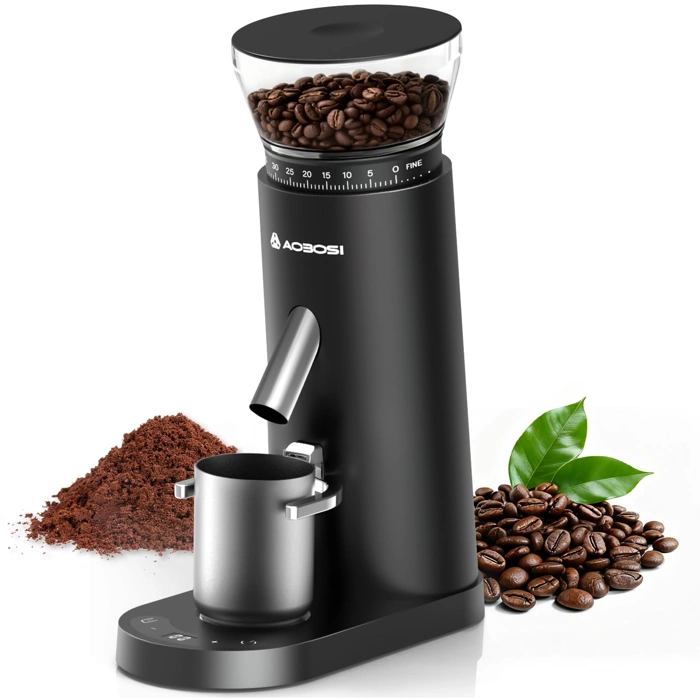
AAOBOSI Cordless Conical Burr Coffee Grinder with 60 Grind Settings
The AAOBOSI Cordless Conical Burr Coffee Grinder offers 60 grind settings in a battery-powered design that reduces cord clutter on the counter. This grind range spans coarse settings suitable for drip machines through to finer grinds, making it a flexible choice if you occasionally brew with a French press or pour-over in addition to your drip coffee maker.
The cordless format means you can grind beans wherever it's convenient - near the drip brewer, at the breakfast table, or tucked away in a cabinet between uses. Conical burrs deliver more uniform particle size than blade grinders, which helps drip coffee extract more evenly and taste cleaner. With 60 steps, you can dial in the exact texture your drip brewer needs without jumping between too-coarse and too-fine in a single click.
At $75.99, this grinder sits in the lower half of the burr-grinder price spectrum, combining adjustability and portability in one package. The 4.6/5 rating suggests most users find the build and grind quality meet everyday expectations. Because it runs on battery power, you'll want to keep an eye on charge level if you grind multiple batches in a morning, but for a typical single-pot drip routine the cordless convenience often outweighs the recharge step.
If counter space is tight or you want the freedom to move your grinder around the kitchen, this model balances burr precision with cord-free practicality. The wide grind span also means you're covered if you decide to explore other brewing methods down the road.
- ✅ 60 grind settings for precise drip and multi-method flexibility
- ✅ Cordless design reduces counter clutter and allows portable grinding
- ✅ Conical burrs produce uniform grind size for even extraction
- ✅ Mid-range price point makes burr grinding more accessible
- ⚠️ Battery charge must be managed for multiple back-to-back grinds
- ⚠️ Cordless format may add slight weight compared to plug-in models
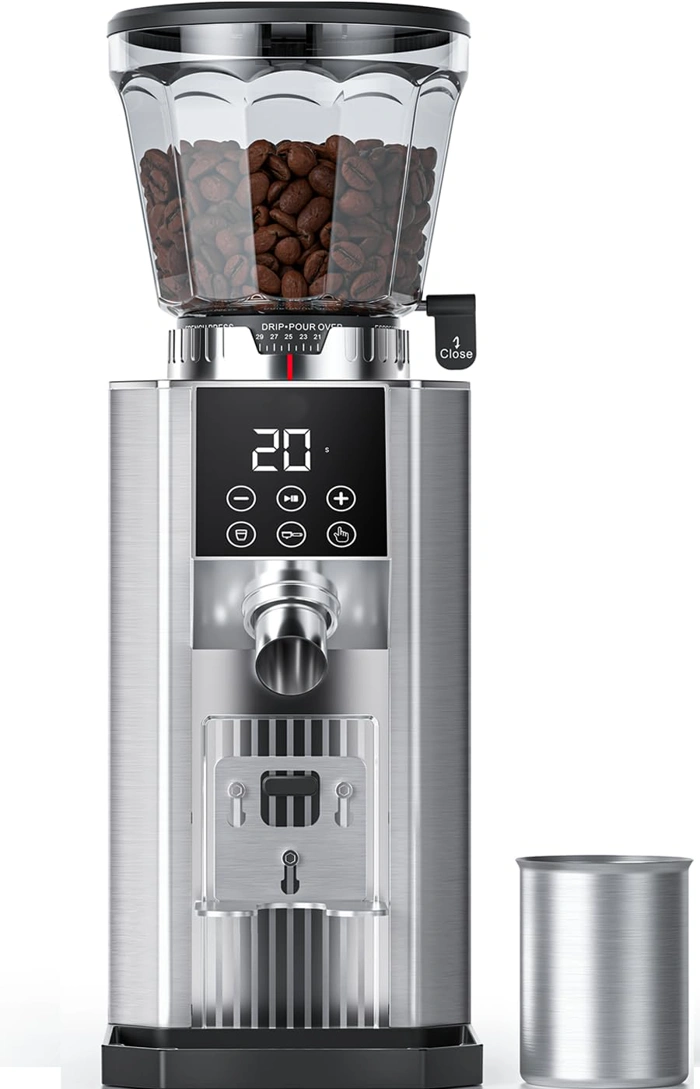
Burr Espresso Coffee Grinder with 45 Grind Settings
The Burr Espresso Coffee Grinder with 45 Grind Settings offers a wide range of grind adjustments in a straightforward electric package. With 45 distinct settings, it covers the spectrum from fine espresso grinds to coarser drip coffee sizes, making it a flexible choice if you brew multiple ways or want room to experiment with your drip brew strength.
Priced at $79.99, this grinder sits in the affordable electric burr category. The broad adjustment range means you can dial in a consistent medium grind for your drip maker and shift coarser or finer as you refine your preference. Unlike blade grinders that chop unevenly, the burr mechanism crushes beans between two surfaces, producing uniform particle size that extracts more evenly in the brew basket.
The trade-off at this price point is usually build quality and grind speed. While the 45-setting dial gives you control, expect some retention between grinds and a bit more noise than higher-end models. For drip coffee use, the grinder handles daily brewing well, though espresso enthusiasts may notice less precision at the finest settings compared to dedicated espresso grinders.
This grinder works best for someone who wants electric convenience, values adjustability, and brews primarily drip coffee with occasional espresso or pour-over. If you're upgrading from a blade grinder or an inconsistent hand grinder, the uniform grind and easy adjustment make a noticeable difference in cup clarity and flavor balance.
- ✅ 45 grind settings cover drip, espresso, and pour-over
- ✅ Affordable electric burr option at $79.99
- ✅ Produces uniform grind for even extraction
- ⚠️ Build quality and grind speed typical of budget electric burrs
- ⚠️ May retain grounds between uses
- ⚠️ Finest settings less precise than dedicated espresso grinders
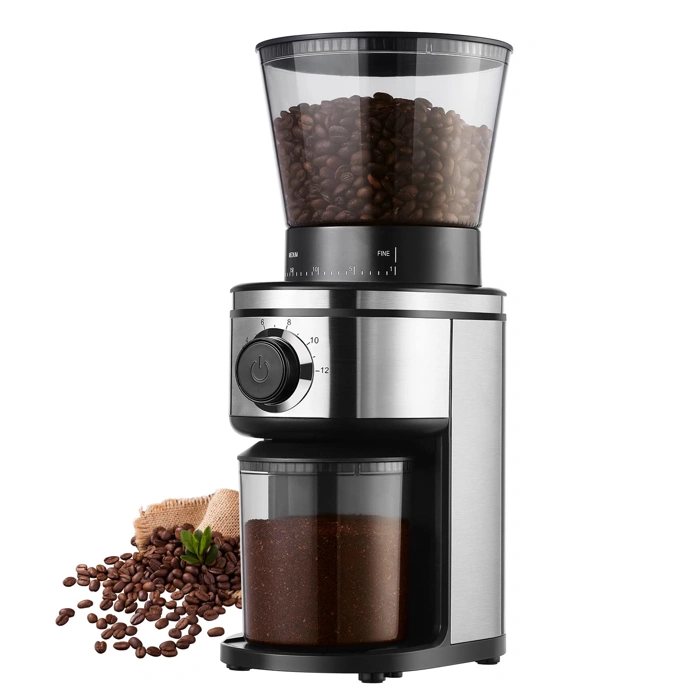
Electric Conical Burr Coffee Grinder with Adjustable Grind
The Electric Conical Burr Coffee Grinder with Adjustable Grind offers a practical entry point for drip coffee users looking to move beyond blade grinding. Priced at $79.99, it brings conical burr technology into an accessible range without requiring a significant commitment.
Conical burrs crush beans between two surfaces rather than chopping them, which creates more uniform particle size. For drip coffee, this uniformity means more even extraction - fewer bitter fines and fewer underextracted chunks in the same brew. The adjustable grind setting lets you dial in the coarseness that works best with your drip machine's basket and brew time.
Electric operation makes daily use straightforward. You set the grind level, add beans, and press a button. This simplicity suits morning routines better than hand-crank models, especially when grinding enough for a full carafe.
At this price point, expect a balance of function and compromise. The grinder handles the core task - producing consistent grinds for drip coffee - but build materials, motor noise, and grind retention may not match higher-tier models. The 4.5/5 rating suggests solid real-world performance within its category.
If you're currently using a blade grinder or buying pre-ground coffee, this electric conical burr grinder represents a meaningful step up in grind quality without the expense of premium machines. It fits well for someone who brews drip coffee regularly and wants better flavor consistency without complex workflow changes.
- ✅ Accessible price at $79.99
- ✅ Conical burrs create uniform grind size for even extraction
- ✅ Adjustable grind settings suit different drip coffee baskets
- ✅ Electric operation simplifies daily use
- ⚠️ Build and materials reflect entry-level positioning
- ⚠️ May have more grind retention than premium models
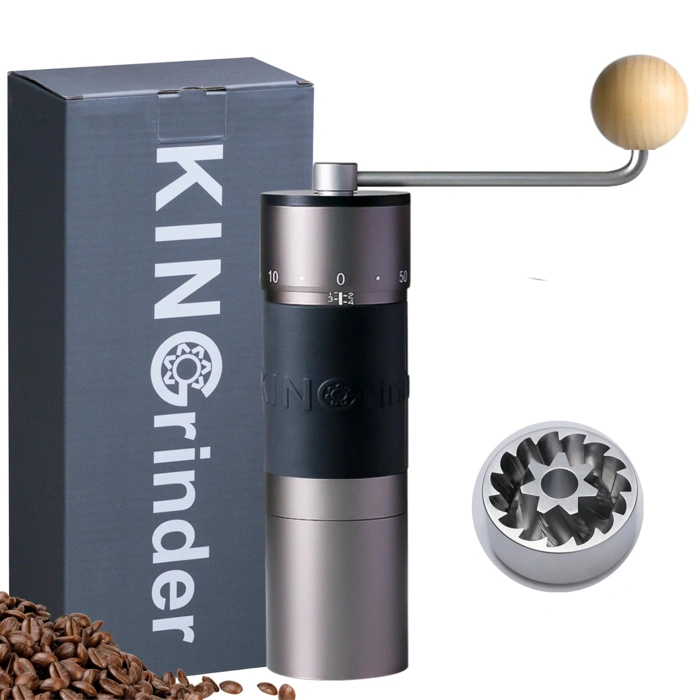
KINGrinder K6 Manual Hand Coffee Grinder with Stainless Steel Conical Burr
The KINGrinder K6 is a manual burr grinder built around a stainless steel conical burr, designed for users who want consistent grind quality without an electric motor. At $99.00, it sits above entry-level hand grinders but reflects that investment in build and durability.
Because it's hand-powered, you control the grind speed and can dial in the coarseness needed for drip coffee. The stainless steel burr resists wear better than ceramic options in some budget grinders, and the metal construction makes it suitable for travel or kitchens where counter space or outlets are limited.
The tradeoff is effort: grinding enough beans for a full drip pot takes a few minutes of consistent cranking. If you brew one or two cups at a time, the manual process is manageable. For larger batches or daily multi-pot brewing, an electric burr grinder will be faster.
This grinder works well when you value portability, quiet operation, and grind uniformity over speed. It's a practical step up for drip users who want burr-level consistency but don't need electric convenience or are willing to trade time for a more compact, durable tool.
- ✅ Stainless steel conical burr for durability and consistent grind
- ✅ Manual operation - quiet, portable, no electricity required
- ✅ Adjustable grind settings suitable for drip brewing
- ✅ Compact and travel-friendly design
- ⚠️ Grinding larger drip batches by hand takes time and effort
- ⚠️ Higher price than basic manual grinders
- ⚠️ Not ideal for users who brew multiple pots daily
The Short Answer
Yes, a burr grinder is worth it for drip coffee - but the improvement depends on what you're starting with.
A burr grinder crushes beans between two abrasive surfaces to produce uniform particle size. Blade grinders chop unpredictably, creating a mix of fine dust and large chunks. When you brew drip coffee with uneven grounds, small particles over-extract and taste bitter while large pieces under-extract and taste sour or weak. The result is muddy, unbalanced flavor.
Uniform grind from a burr grinder leads to more even extraction. Water flows through the coffee bed at a consistent rate, pulling flavor compounds from each particle in roughly the same way. You'll notice cleaner sweetness, more defined fruit or chocolate notes, and a smoother finish.
That said, the upgrade matters most when you're using fresh, quality beans and a drip brewer that maintains stable temperature and even water distribution. If your beans are stale or your brewer runs too hot or too cold, a burr grinder won't fix those problems. It amplifies what's already there - good beans get better, but mediocre coffee stays mediocre.
For most drip coffee drinkers who care about flavor and buy whole beans, a burr grinder is the single most effective upgrade. It's more impactful than expensive filters, fancy carafes, or water additives.
What a Burr Grinder Actually Changes
A burr grinder uses two abrasive surfaces - either flat ceramic discs or conical metal burrs - that crush coffee beans between them. As the gap between the burrs narrows, beans are ground to a target size and then released. This design produces uniform particles because every bean passes through the same controlled space.
Blade grinders work differently: a spinning blade chops beans in a chamber, similar to a food processor. Because the blade strikes beans randomly, some pieces turn to powder while others remain coarse chunks. Shaking the grinder or pulsing can help, but the method itself cannot deliver consistent particle size.
Uniform grind size matters because water extracts soluble compounds from coffee at a predictable rate based on surface area. When grounds are the same size, extraction happens evenly across the brew. Fine particles over-extract quickly, releasing bitter, astringent flavors. Coarse particles under-extract, contributing sour or weak notes. A mixed grind delivers both problems in the same cup.
Drip coffee makers rely on a steady flow of water through a filter bed. If the bed contains a range of particle sizes, water finds the path of least resistance - channeling through coarse gaps and rushing past fine powder. The result is uneven contact time and inconsistent flavor. A burr grinder eliminates this variability, letting your drip machine perform as designed.
This difference becomes more obvious as you move away from dark roasts, which can mask extraction issues with roast character. Light and medium roasts reveal the clarity - or lack of it - that grind consistency brings.
What You Don't Need to Spend
One of the biggest objections to upgrading from a blade grinder is cost. The good news: you don't need a $300+ grinder to improve your drip coffee.
Entry-level conical burr grinders in the $75 - $100 range deliver consistent, uniform particle size - exactly what drip coffee needs. Models in this category typically offer 15 - 40 grind settings, which is more than enough to dial in medium and medium-fine grinds for most drip brewers. The burrs are durable, and grind retention is low enough that you won't waste coffee between batches.
Higher-priced grinders - those in the $200 - $400 range - offer finer stepless adjustment, quieter motors, faster grinding, and sturdier metal housings. These features matter more for espresso, where tiny shifts in grind size change extraction dramatically. For drip coffee, where the tolerance window is wider, the difference in cup quality between a $90 grinder and a $250 grinder is modest.
If you're brewing drip daily and currently using a blade grinder or pre-ground coffee, an affordable conical burr grinder is the upgrade that makes the most noticeable difference. Save the premium models for when you're ready to explore espresso or pour-over at a more granular level.
How to Know If It's Working
Once you switch to a burr grinder, you should notice three practical changes in your drip coffee routine. First, your grind will look more uniform - particles will be similar in size rather than a mix of boulders, dust, and everything in between. Second, your coffee will taste cleaner, with fewer sharp, bitter notes or sour patches that come from uneven extraction. Third, when you adjust grind size to dial in your brew, the results will be more predictable; a small change in setting produces a consistent shift in flavor rather than random outcomes.
These improvements are real but incremental. If you currently brew coffee that tastes muddy, harsh, or inconsistent from one morning to the next, a burr grinder will address those issues. The change is most noticeable when you compare two pots brewed back-to-back using the same beans - one ground with a blade grinder, one with a burr grinder. The burr-ground coffee typically feels more balanced, with sweetness and acidity in better proportion.
Set realistic expectations: a burr grinder won't transform mediocre beans into exceptional coffee, and it won't override problems like stale coffee, incorrect water temperature, or a dirty brewer. What it does is remove grind inconsistency as a variable, so the other factors in your process - bean quality, water, timing - can express themselves clearly. If you taste your coffee and notice it's easier to identify flavors, and your adjustments to grind size produce the results you expect, the grinder is doing its job.
Simple Next Steps
If you already use fresh beans and a reliable drip brewer, the logical next move is to upgrade to an entry-level burr grinder in the $75 - $100 range. That step will give you the most noticeable improvement in consistency and flavor without requiring a dramatic change in your routine.
If you're still using pre-ground coffee or beans that have been open for weeks, start there instead. A burr grinder can't fix stale coffee - it only ensures that fresh beans are ground evenly. Prioritize sourcing beans roasted within the past two to four weeks and storing them in an airtight container away from light and heat.
Once your bean supply is solid, a burr grinder becomes the tool that unlocks the flavor you've been paying for. Look for models with clearly marked grind settings, a hopper large enough for your typical batch size, and straightforward cleaning access. Avoid the temptation to jump to high-end grinders until you know your preferences and usage pattern.
If you're uncertain about which drip brewer pairs best with a burr grinder or how to evaluate bean freshness, those topics are worth exploring before you invest. The grinder is one piece of a system - getting the other pieces right makes the upgrade meaningful.