We may earn a commission when you buy through links on this page, at no extra cost to you. How this works.
Chlorine, metallic notes, and off-flavors in tap water can overpower the subtle fruit, chocolate, or floral characteristics you paid for in specialty coffee. Even if your municipal water meets safety standards, treatment chemicals and mineral imbalances often leave behind tastes that compete with - or completely mask - the beans' intended profile.
Filtering isn't simply about removing everything from your water. Coffee benefits from some dissolved minerals like calcium and magnesium, which help extract flavor compounds during brewing. The goal is to eliminate chlorine, sediment, and metallic tastes while preserving enough mineralization for balanced extraction and body.
Choosing the right filter pitcher means matching filtration technology to your tap water's specific problems, your daily coffee volume, and how much maintenance you're willing to manage. A pitcher that works well for someone dealing with heavy chlorine in a small household may be the wrong fit if you're brewing multiple pots a day or tackling hard water with high mineral content.
This guide walks through the factors that matter most - filtration method, capacity, filter lifespan, and mineral balance - so you can select a pitcher that improves your coffee's taste without adding unnecessary steps to your morning routine.
Who This Guide Is For
This guide is for home coffee brewers who taste chlorine, metallic notes, or flat flavors in their cup and want a simple fix without plumbing work. If you brew drip, pour-over, French press, or espresso at home and control your water source, a filter pitcher offers a low-effort upgrade that fits into your existing routine. You don't need to install an under-sink reverse osmosis system or buy bottled water by the case - just fill, filter, and brew.
We focus on pitchers that remove the contaminants that ruin coffee flavor while keeping enough beneficial minerals for extraction and taste. This approach works whether you're dialing in a single-origin pour-over or just want your morning pot to taste cleaner. If you notice inconsistent brew quality, sour or bitter notes you can't troubleshoot with grind or ratio, or a chemical aftertaste, the water itself is often the missing variable.
This is not a guide for whole-home filtration, countertop distillers, or remineralization systems. It's for brewers who want better water in a compact, affordable format that sits in the fridge and requires no installation.
What Water Filter Pitchers Actually Do
Water filter pitchers use two main technologies to improve taste without stripping away everything in your tap water. Activated carbon, the primary filter medium, adsorbs chlorine, chloramines, and organic compounds that create off-flavors and interfere with coffee's aromatic oils. Ion-exchange resins in many pitchers reduce certain heavy metals like lead and copper, and can lower hardness by capturing calcium and magnesium ions - though most pitchers leave enough minerals behind to support extraction and flavor balance.
Pitchers do not remove all dissolved solids, fluoride, or nitrates, and that limitation is actually useful for coffee brewing. Total demineralization produces flat, under-extracted coffee because minerals act as carriers for flavor compounds during extraction. A good pitcher targets contaminants that mask or distort taste - chlorine's medicinal edge, sediment's cloudiness, metallic notes from old pipes - while preserving the mineral content that helps water pull sugars, acids, and oils from ground coffee.
Filtration changes what you smell and taste immediately: chlorine odor disappears, metallic or earthy notes fade, and the cup becomes cleaner. It does not make hard water soft, raise or lower pH dramatically, or guarantee perfect extraction if your brewing method, grind size, or coffee quality are inconsistent. Set your expectation on removing interference, not engineering ideal water chemistry from scratch.
Capacity and Refill Frequency: Match Your Brewing Habits
Your daily brewing volume determines which pitcher capacity will save you the most hassle. If you brew a single 12-ounce cup each morning, a compact 5-cup pitcher might be enough - but anyone making a full 8-cup carafe, pulling multiple espresso shots, or preparing cold brew will find themselves refilling two or three times a day. A 10-cup pitcher holds roughly 80 fluid ounces of filtered water, which covers a full pour-over carafe plus rinsing your brewer and filling a kettle for an afternoon cup without constant trips to the sink. The tradeoff is vertical fridge space: larger pitchers stand taller and may not fit under low shelves or in door compartments. Measure your refrigerator's interior height before you buy, especially if you prefer to keep filtered water chilled for iced coffee or to slow any residual chlorine taste. If counter space allows, you can leave the pitcher at room temperature and refill as needed, though this approach works best in cooler kitchens where water stays fresh. For households brewing multiple times a day or batch-prepping cold brew concentrate, the fewer refills a larger reservoir requires will quickly justify the extra footprint.
Filter Lifespan and Replacement Costs: The Real Price of Clean Water
A pitcher's sticker price tells only part of the story - filter replacement costs add up quickly, especially for coffee drinkers who use several cups of filtered water each day. Standard filters typically last 40 gallons or about two months in a household brewing one pot daily, while longlast filters extend service life to 120 gallons or roughly six months before requiring replacement.
If you purchase a $25 pitcher with standard filters priced at $8 each, you'll spend approximately $48 annually on replacements assuming six filter changes. A $35 pitcher using longlast filters at $15 apiece drops annual replacement costs to around $30 with only two changes per year. Heavy coffee users brewing multiple pots daily will hit the 40-gallon threshold faster - sometimes in under six weeks - making longlast options a clear value despite higher per-filter prices.
Forgetting to replace a spent filter degrades taste noticeably. As activated carbon becomes saturated, it stops adsorbing chlorine and organic compounds, allowing the same off-flavors you bought the pitcher to avoid. Most pitchers include a basic timer or sticker reminder, but these rely on you marking the installation date and checking regularly. If you tend to lose track of maintenance schedules, choose a pitcher with an electronic indicator that counts gallons or days automatically.
Calculate your true cost by estimating weekly water volume: multiply daily coffee brewing (plus any drinking water) by seven, then divide filter capacity by that number to find replacement frequency. Comparing total annual spend - pitcher plus filters - reveals which system fits your budget and usage pattern without surprise expenses six months in.
Common Mistakes to Avoid
Choosing a filter pitcher without considering daily coffee consumption often leads to frustration. Many people buy a small 5-cup pitcher for a household brewing multiple pots each day, which means constant refilling and waiting for filtration. Measure your actual daily water use for coffee and choose a reservoir size that covers at least a full day without interruption.
Ignoring the lifetime cost of replacement filters can turn an affordable pitcher into an expensive habit. A pitcher with a low upfront price but proprietary filters that cost $15 every month will outpace a more expensive model with cheaper, longer-lasting filters within a year. Calculate the annual filter cost before purchasing, not just the pitcher price.
Forgetting to change filters on schedule is one of the most common mistakes that degrades coffee quality. Old filters lose their ability to remove chlorine and organic compounds, letting off-flavors return to your water. Set a phone reminder or use a model with an electronic indicator to track filter life by gallons filtered rather than calendar days.
Expecting a standard activated carbon pitcher to soften very hard water leads to disappointment. Most pitchers reduce chlorine, sediment, and some metals, but they do not remove the calcium and magnesium that cause hardness and scale buildup. If your tap water measures above 150 ppm total hardness, you may need a dedicated ion-exchange softener or a reverse osmosis system instead of a pitcher.
Using hot tap water to speed up the brewing process damages carbon filters and releases trapped contaminants back into the water. Pitcher filters are designed for cold water only; heat breaks down the carbon structure and can warp plastic components. Always fill your pitcher with cold tap water and plan ahead so filtered water is ready when you need it.
Each of these mistakes has a straightforward fix: size your pitcher to real usage, compare total annual cost including filters, automate filter reminders, test your water hardness before expecting a pitcher to solve scale issues, and stick to cold water. Avoiding these pitfalls ensures your pitcher delivers consistent, clean-tasting water for every cup of coffee.
How to Know If Your Filter Is Working
The easiest way to know if your filter pitcher is working is to brew the same coffee twice - once with filtered water and once with tap - and taste them side by side. Pour both cups at the same temperature, using the same grind size and brew ratio, then compare the aroma and flavor directly.
With effective filtration, you'll notice less chlorine smell when you lift the cup, a cleaner finish without metallic or chemical aftertaste, and more distinct flavor notes - whether that's fruit, chocolate, or floral tones depending on the bean. The difference is often subtle at first sip but becomes more obvious as you drink, especially in the aftertaste and overall clarity.
Keep in mind that filtering water won't rescue stale beans, inconsistent grind, or incorrect brew temperature. If your coffee still tastes flat or bitter after switching to filtered water, the problem likely lies elsewhere in your process. Water filtration removes interference; it doesn't add quality that wasn't there to begin with.
Over time, as your filter cartridge ages, you may notice chlorine smell creeping back or a return of that papery, flat taste. That's your signal to replace the cartridge, even if the manufacturer's timeline hasn't passed yet. Trust your palate - it's the most reliable test you have.
Final Takeaway: Pick for Your Routine, Not Perfection
The best water filter pitcher for coffee is the one you'll actually use every day and replace filters for on schedule. A pitcher that sits unused because it's too slow, too large for your fridge, or too expensive to maintain won't improve your brew no matter how well it filters. Match the pitcher to your routine first, then refine filtration performance from there.
Upfront cost and filter lifespan are the central tradeoff. Budget pitchers with monthly filters cost less to start but rack up ongoing expenses. Mid-range models with 40- to 60-gallon filters spread replacement costs over two or three months, balancing convenience and economy. High-capacity systems with six-month filters carry steeper entry prices but lower the frequency of shopping and installation. Choose based on how often you're willing to swap cartridges and whether you prefer smaller, frequent purchases or larger upfront investments.
Reminder systems help prevent stale filters that reintroduce off-flavors into your coffee. Electronic indicators track volume or time automatically, while manual stickers and calendar notes require discipline. If you often forget routine tasks, an automatic tracker is worth the extra cost. If you're diligent about kitchen maintenance, a simple date sticker works just as well. Either way, replacing filters on time matters more than the sophistication of the reminder method.
Capacity and fridge space also shape daily usability. A 10-cup pitcher reduces refill trips but may not fit on crowded shelves or in narrow doors. A 6-cup model tucks into tight spaces but requires more frequent filling if you brew multiple pots or share the pitcher with others. Measure your fridge before you buy, and consider how many cups of coffee you make each day. A pitcher that forces constant refills or won't fit where you need it becomes a frustration instead of an upgrade.
Start with a straightforward option that removes chlorine and sediment, holds enough water for your typical brew volume, and uses filters you can find locally or order with confidence. Taste the difference in your coffee after a week of filtered water. If you notice cleaner flavors and want further improvement, you can explore pitchers with specialty media for hardness or fluoride. If the change is dramatic enough, stick with what works. The goal is better-tasting coffee through consistent, convenient filtration, not chasing perfection that never gets used.
What Matters Most When Choosing a Filter Pitcher for Coffee
- Chlorine and chloramine removal (the biggest coffee flavor killers)
- Capacity that matches your daily brewing volume without constant refilling
- Filter lifespan and replacement cost (frequent changes add up)
- Filter change reminders (electronic or manual tracking)
- Pour speed and reservoir refill convenience
- Compatibility with your fridge and counter space
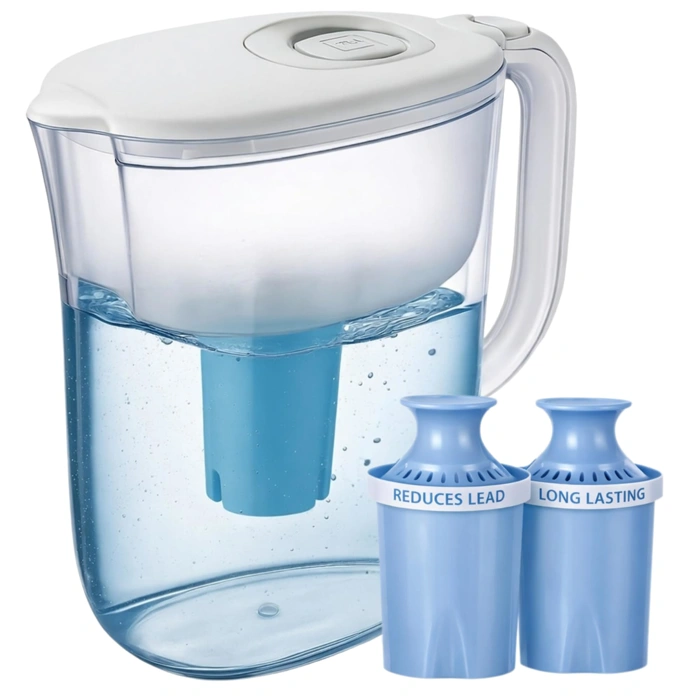
JOEY'Z 10-Cup Water Filter Pitcher with 2 Longlast Filters & Electronic Reminder
Heavy coffee users who brew multiple pots daily need a pitcher that can keep pace without constant filter swaps. The JOEY'Z 10-Cup Water Filter Pitcher includes two Longlast filters and an electronic reminder that tracks filter life automatically, removing guesswork from your maintenance routine.
The 10-cup reservoir holds enough filtered water for back-to-back brewing sessions, and the Longlast filters extend replacement intervals compared to standard cartridges. The electronic reminder monitors usage and alerts you when it's time to swap, so you never accidentally brew with a spent filter that lets chlorine and off-flavors back into your coffee.
At $49.99, the upfront cost runs higher than basic pitchers, but the package includes two Longlast filters that reduce your per-gallon cost over time. For households that drain a pitcher daily, the combination of larger capacity, extended filter life, and hands-off tracking makes this a practical fit. If you brew only one or two cups in the morning, a smaller pitcher with manual tracking will likely meet your needs at lower cost.
The automatic reminder works well for coffee drinkers who prefer a set-it-and-forget-it approach to filter maintenance. You avoid the calendar-watching and sticky-note systems that smaller pitchers require, and you keep water quality consistent across heavy use.
- ✅ 10-cup capacity handles multiple brewing sessions without refilling
- ✅ Electronic reminder tracks filter life automatically
- ✅ Includes two Longlast filters for extended replacement intervals
- ✅ Hands-off maintenance suits heavy daily use
- ⚠️ $49.99 upfront cost higher than basic pitchers
- ⚠️ Larger footprint may not fit compact refrigerator shelves
- ⚠️ Overkill for single-cup or occasional coffee drinkers
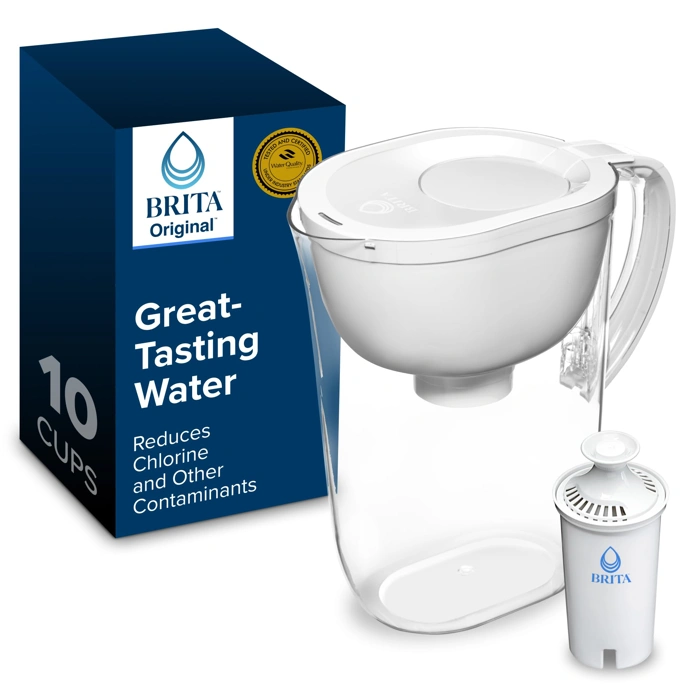
Brita Large 10-Cup Water Filter Pitcher with 1 Standard Filter
The Brita Large 10-Cup Water Filter Pitcher offers a low-cost entry point for coffee drinkers who want to remove chlorine and sediment from tap water without a significant upfront investment. At $28.49, it provides 10-cup capacity - enough to fill a carafe and rinse equipment - while using widely available standard Brita filters that retail for a few dollars each at most grocery and big-box stores.
Standard Brita filters use activated carbon and ion-exchange resin to reduce chlorine taste and odor, copper, mercury, and cadmium. They do not remove fluoride or total dissolved solids, so the mineral profile of your tap water stays largely intact. This is helpful for coffee, since some calcium and magnesium contribute to extraction and body. The filter lifespan is approximately the listed size or two months under typical household use, which translates to more frequent replacements than longlast or premium filters but keeps the recurring cost predictable.
The 10-cup reservoir fits comfortably in most refrigerator doors, and the flip-top lid makes refilling quick without removing the entire pitcher. The pour-through design means water filters as the reservoir drains into the lower chamber, so you can add more water before the previous batch finishes filtering. This convenience supports a continuous supply during morning routines or back-to-back brew sessions.
The tradeoff is clear: you pay less upfront and maintain low recurring costs, but you'll change filters roughly every eight weeks instead of every six months. For moderate coffee drinkers - one to three cups per day - who want to test whether filtered water improves flavor before investing in a higher-capacity or longlast system, this pitcher delivers consistent chlorine removal and straightforward maintenance. The wide filter availability also means you won't need to order specialty cartridges or wait for shipments.
If your tap water has noticeable chlorine or off-flavors and you're unsure how much filtration will change your coffee, the Brita 10-cup pitcher is a practical, budget-conscious way to establish a baseline and decide whether a more advanced filter system is worth the step up.
- ✅ Low $28.49 entry price with no specialty equipment required
- ✅ 10-cup capacity suits daily coffee brewing and equipment rinsing
- ✅ Standard filters widely available in grocery and retail stores
- ✅ Removes chlorine taste and odor while keeping helpful minerals
- ✅ Pour-through design supports continuous refilling during use
- ⚠️ Standard filters last approximately 40 gallons or two months, requiring more frequent changes
- ⚠️ Does not remove fluoride or significantly reduce total dissolved solids
- ⚠️ Filter replacement costs add up over time compared to longlast options
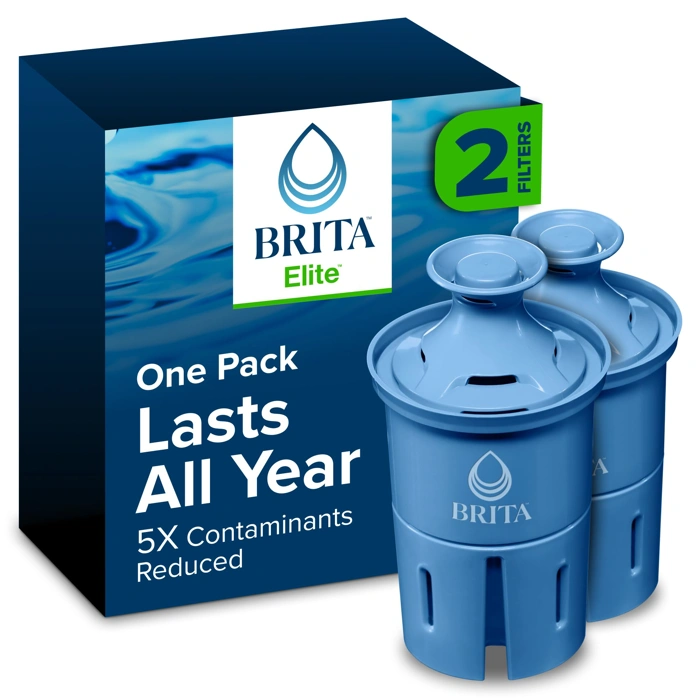
Brita Elite Filter Replacements, 2 Count
If you already own a Brita pitcher and brew coffee daily, Elite Filter Replacements offer a practical upgrade that cuts replacement frequency by two-thirds. Each Elite filter lasts up to the listed size - three times longer than Brita's standard filters - which translates to approximately six months of use for a household brewing two pots of coffee per day.
The longer lifespan means fewer cartridge swaps and lower cost per gallon over time, particularly useful for coffee brewers who filter several liters each week. Elite filters fit Brita Elite and Brita Stream pitchers, but do not work with older Standard or Longlast models, so confirm your pitcher's compatibility before ordering. The two-pack format provides a full year of filtration for typical coffee-focused use.
This filter uses the same activated carbon and ion-exchange media as Brita's standard cartridges, removing chlorine taste and odor that interfere with coffee flavor while retaining beneficial minerals like calcium and magnesium. The extended capacity makes it a sensible choice if you've noticed yourself replacing filters every six to eight weeks and want to reduce that maintenance rhythm without purchasing an entirely new pitcher system.
At $29.78 for two filters, the per-filter cost is higher upfront than standard replacements, but the multiple-gallon capacity brings the cost per gallon below many competitors when you filter multiple liters daily. If you already have a compatible Brita pitcher and want to minimize replacement interruptions, the Elite format delivers measurable convenience for regular coffee brewing routines.
- ✅ 120-gallon lifespan reduces replacement frequency to approximately twice per year for daily coffee brewers
- ✅ Compatible with Brita Elite and Stream pitchers, no new pitcher purchase required
- ✅ Lower cost per gallon than standard filters when filtering multiple liters per week
- ✅ Two-pack provides a full year of filtration for typical household coffee use
- ⚠️ Only fits Brita Elite and Stream models, not compatible with older Standard or Longlast pitchers
- ⚠️ Higher upfront cost per filter compared to standard Brita replacements
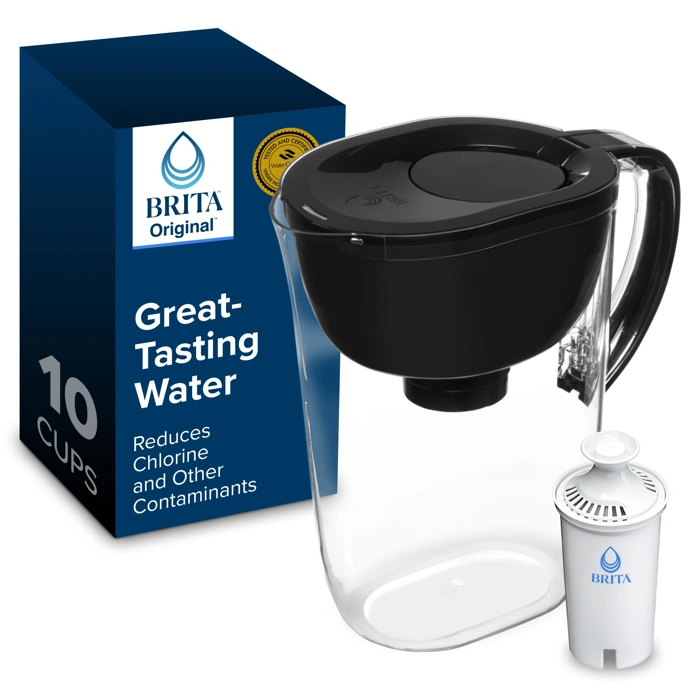
Brita Large 10-Cup Water Filter Pitcher with SmartLight & 1 Standard Filter
If you routinely forget to mark down filter-change dates, the Brita Large 10-Cup Water Filter Pitcher with SmartLight offers a built-in reminder that glows when it's time to swap cartridges. The SmartLight sits at the top of the handle and tracks usage automatically, eliminating the need for manual stickers or phone calendar alerts. This pitcher holds ten cups - enough for a few days of coffee brewing in a typical household - and ships with one standard Brita filter rated for approximately forty gallons or two months of use.
The standard filter reduces chlorine taste and odor, which can flatten coffee aromatics, and captures copper, mercury, and cadmium. It does not remove fluoride or all dissolved solids, so expect some mineral character to remain in the filtered water - helpful for maintaining body in your cup. The SmartLight runs on a small battery (included) and blinks red when the filter reaches the end of its lifespan, so you see the cue every time you pick up the pitcher.
Compared to electronic reminders on smart pitchers or manual peel-and-stick trackers, the SmartLight offers a middle path: you get a visual prompt without needing a smartphone app, but you still use the standard two-month cartridge rather than the longer-life filters found on some models. If you value a hands-off tracking method and don't mind replacing filters more frequently than longlast alternatives, this pitcher fits the need. For users who already have a filter-change habit or prefer the lowest ongoing cost per gallon, a manual-sticker model or a pitcher that accepts extended-capacity cartridges may be more practical.
The ten-cup reservoir fits on most refrigerator shelves, though the flip-top lid adds a couple of inches to the overall height. Pouring is straightforward, and the handle design accommodates both left- and right-handed grips. At $28.49, the upfront cost is moderate, and replacement standard filters are widely available in multipacks. The SmartLight removes one common friction point - remembering when to change the cartridge - making it a sensible pick for households that prioritize convenience and consistent filter performance over the lowest per-gallon cost.
- ✅ SmartLight glows automatically when the filter needs replacement, eliminating manual tracking
- ✅ Ten-cup capacity suits multi-day coffee brewing for typical households
- ✅ Standard filter reduces chlorine taste and odor while keeping helpful minerals
- ✅ No smartphone app required for filter-change reminders
- ✅ Widely available replacement cartridges
- ⚠️ Standard filter lifespan is shorter than longlast alternatives, increasing replacement frequency
- ⚠️ SmartLight requires a small battery, adding a maintenance step
- ⚠️ Does not remove fluoride or all dissolved solids
- ⚠️ Flip-top lid adds height, which may limit fit on some refrigerator shelves