We may earn a commission when you buy through links on this page, at no extra cost to you. How this works.
Mr. Coffee Programmable Espresso and Cappuccino Machine with Automatic Milk Frother
One-touch machines that grind, brew, and froth without the learning curve.
If you've spent the past year watching your daily café budget climb while wishing for better espresso at home, you're not alone. Manual espresso machines promise control, but they also demand grind adjustments, tamping technique, and patience most of us don't have before our first cup. Super-automatic espresso machines eliminate that learning curve entirely: press a button, and the machine grinds fresh beans, brews under pressure, and delivers a consistent shot every time.
For beginners, the appeal is clear. You don't need to master dose, grind size, or extraction time. You don't need a separate grinder or tamper. The machine handles every step from whole beans to finished espresso in under a minute. Many models under $1,000 also include automatic milk frothers, so cappuccinos and lattes are just as simple.
The tradeoff is control. Super-automatics prioritize convenience over customization. You won't dial in grind adjustments shot-by-shot or experiment with pre-infusion profiles the way you would with a manual machine. But if your goal is reliable, cafe-quality espresso without the ritual - and without the mistakes - this category delivers.
This guide focuses on the sweet spot: machines under $1,000 that balance grinder quality, milk system usability, and build reliability. We'll compare burr grinder types, milk frothing methods, and maintenance requirements so you can choose the right fit for your kitchen and routine. Whether you prioritize one-touch lattes, compact footprint, or quieter operation, the decision comes down to real attributes, not marketing claims.
How We Evaluated These Machines
We approached this evaluation from the perspective of someone buying their first super-automatic machine. That means we focused on criteria that matter most when you're learning how espresso extraction, milk texture, and machine maintenance all work together.
Grinder performance was our first checkpoint. Built-in burr grinders at this price point use ceramic or steel burrs with anywhere from 5 to 13 grind settings. We looked for grinders that produce consistent particle size without excessive fines, since grind quality directly affects extraction and crema. Machines with wider adjustment ranges give you more room to dial in different roasts.
Milk system design separates machines into three camps: automatic steam wands with carafes, panarello-style manual wands, and LatteGo-style detachable pitchers. We evaluated each system on texture quality, ease of learning, and how quickly you can clean it after every use. Beginners benefit most from systems that remove guesswork but still produce microfoam dense enough for latte art.
Cleaning and maintenance requirements vary widely. We noted whether the brew group is removable for rinsing, how often the machine prompts descaling, and whether milk components disassemble without tools. Machines that make daily cleaning intuitive help beginners build good habits before calcium buildup or milk residue becomes a problem.
Footprint and water capacity matter in smaller kitchens. We measured each machine's width, depth, and height, and noted bean hopper and water reservoir sizes. A compact machine with a 40-ounce tank may require more frequent refills than a larger model, but it will fit under standard cabinets.
Interface and programmability were assessed for clarity. The best beginner machines use simple button layouts or intuitive touchscreens, let you save drink preferences, and provide clear error messages. We avoided machines with confusing iconography or multi-step menu systems.
Every machine in this guide sits below the $1,000 threshold, which means certain tradeoffs are unavoidable. You won't find dual boilers, pre-infusion chambers, or app connectivity at this price. Grinders will have fewer steps than $2,000 models, and build materials lean toward durable plastic rather than stainless steel. But each machine here delivers genuine espresso from whole beans with minimal technique required - exactly what a beginner needs to start the learning curve without wasting shots or money.
Super-Automatic vs Semi-Automatic: Which is Right for You?
Super-automatic and semi-automatic espresso machines serve different users. Understanding the tradeoff between convenience and control will help you choose the right category before you invest.
Super-automatic machines handle the entire process from bean to cup. You pour beans into the hopper, press a button, and the machine grinds, tamps, brews, and often froths milk automatically. This convenience makes them ideal for beginners who want consistent espresso without learning manual technique. They're also practical for busy mornings or multi-user households where speed and repeatability matter more than hands-on craft.
Semi-automatic machines require you to grind, dose, tamp, and time the shot yourself. You control every variable, which gives experienced users the ability to fine-tune extraction and explore different beans and roast profiles. However, this control comes with a learning curve. You'll need a separate grinder, practice with tamping pressure, and patience to dial in each new coffee. The result can be more nuanced shots, but the process takes longer and demands more skill.
The key tradeoff is convenience versus craft. Super-automatics remove variables and save time, but you sacrifice the hands-on experience and fine adjustments that hobbyists value. Semi-automatics offer deeper control and the satisfaction of manual brewing, but they require investment in technique and equipment.
If you want reliable espresso with minimal effort, a super-automatic under $1,000 is the right fit. If you enjoy experimenting with grind size, dose, and extraction time - and you're willing to practice - a semi-automatic may serve you better in the long run. For beginners prioritizing ease of use and consistency, super-automatics deliver the most value without the steep learning curve.
What to Expect in the Under-$1000 Price Range
The under-$1,000 price range is where super-automatic espresso machines become genuinely accessible for beginners, offering reliable bean-to-cup convenience without the complexity or cost of professional-grade equipment. At this level, you'll find machines that handle the entire espresso-making process - grinding, tamping, brewing, and often frothing - with minimal manual intervention.
Most machines in this bracket feature burr grinders, though they're typically ceramic or entry-level steel burrs rather than the commercial-grade flat burrs found in premium models. Grind adjustment is usually present but may offer fewer steps - often 3 to 5 settings rather than the 10+ you'd see on higher-end units. This is sufficient for dialing in espresso versus Americano strength, but fine-tuning for specific bean origins becomes more limited.
Milk systems at this price point tend to be either manual steam wands or panarello-style frothers. Fully automatic milk frothers with one-touch cappuccino buttons exist but are less common under $1,000. Manual wands give you more control over texture but require practice, while panarello attachments create foam quickly with less skill needed, though the microfoam quality won't match what a skilled barista produces with a traditional wand.
Brew group design is a key differentiator. Many machines in this range use removable brew groups that you can rinse under the tap, making maintenance straightforward. This is a practical feature for beginners who want to avoid complicated cleaning routines. However, some budget-friendly models use fixed brew groups with automatic rinse cycles, which can be convenient but leave you dependent on the machine's self-cleaning effectiveness.
You should expect straightforward controls - usually a combination of buttons and perhaps a simple dial - rather than touchscreens or app connectivity. Programmability exists but is often limited to shot volume and sometimes strength. Temperature control, pre-infusion timing, and pressure profiling are rarely adjustable at this price point; these machines use factory-set parameters designed to produce consistent results across a range of beans.
Build quality typically involves more plastic components in the housing and internal frame, though key brewing parts like the brew group and boiler are still metal. This affects durability over decades but doesn't necessarily compromise daily performance. A well-maintained machine in this range can reliably produce hundreds of drinks per year for many years.
The main tradeoff compared to spending $1,500 or more is customization. Premium machines offer finer grind control, adjustable brew temperatures, programmable pre-infusion, dual boilers for simultaneous brewing and steaming, and often quieter operation. But for a beginner learning to appreciate espresso at home, the machines under $1,000 deliver the core experience: fresh-ground coffee brewed under pressure, with crema, at the push of a button.
If you're wondering whether cheaper machines can produce quality espresso, the answer is yes - within limits. The coffee will be fresher and more flavorful than capsule machines or pre-ground alternatives, and you'll have enough control to adjust strength and volume to your taste. What you give up is the ability to chase the perfect shot through micro-adjustments and the capacity to steam milk while pulling a shot. For most beginners, those tradeoffs are entirely reasonable in exchange for a lower entry cost and simpler operation.
Maintenance and Cleaning: What You Need to Know
Super-automatic espresso machines promise convenience, but they still require regular maintenance to keep brewing quality high and prevent breakdowns. Understanding the cleaning routine before you buy helps set realistic expectations and ensures you choose a machine that fits your schedule.
Most super-automatics under $1000 include automatic rinse cycles that flush the brew group and coffee spouts when you power the machine on or off. These cycles take seconds and reduce manual cleaning frequency. You'll still need to empty the drip tray and grounds container every few days, depending on how much coffee you make. Both tasks are quick - just remove, rinse, and replace.
The brew group is the heart of the machine and needs weekly attention. Some models feature removable brew groups that you can rinse under running water, while others use fixed groups that run self-cleaning programs. Removable groups offer more control and let you inspect for coffee oil buildup, but fixed groups eliminate the risk of improper reassembly. Check which design your machine uses and decide which trade-off suits you better.
Milk system maintenance is the most time-sensitive task. If your machine has an integrated milk frother or carafe system, rinse the milk circuit immediately after each use to prevent residue from hardening. Many machines in this price range offer automatic milk-system cleaning cycles that push hot water or steam through the tubing. Plan to deep-clean milk components with warm soapy water two to three times per week if you make milk drinks daily.
Descaling removes mineral deposits from internal water lines and the boiler. Frequency depends on your water hardness - typically every two to three months for moderately hard water, less often if you use filtered or bottled water. Most super-automatics will alert you when descaling is due. The process takes 20 to 30 minutes and requires a descaling solution compatible with your machine. Keep a bottle on hand so you're ready when the alert appears.
Water filters are optional but worthwhile. Installing a filter in the reservoir reduces descaling frequency and can improve taste by removing chlorine and impurities. Filters need replacement every two months or after a set number of liters, and they add a modest ongoing cost - usually around $10 to $15 per filter.
Grinder burrs should be cleaned every few months to remove trapped oils and fine particles. Some machines allow you to access the grinder with basic tools, while others require disassembly best left to a service center. Consult your manual for guidance, and consider this task part of your twice-yearly maintenance routine.
Budget five to ten minutes per day for routine tasks like emptying bins and rinsing the milk system, plus 20 to 30 minutes every few months for descaling and deeper cleaning. Machines with more automation - like one-touch milk cleaning or easy-access brew groups - will save you time and frustration, especially if you're new to espresso machines.
Neglecting maintenance shortens machine lifespan and degrades coffee quality. Stale oils create bitter flavors, mineral buildup restricts water flow, and clogged milk lines become breeding grounds for bacteria. Staying on top of the routine ensures consistent espresso and protects your investment.
Final Verdict: Which Machine Should You Choose?
Choosing the best super-automatic espresso machine under $1000 comes down to balancing your priorities: ease of use, milk quality, grinder performance, and budget.
If you want the most balanced experience, the Philips 3200 LatteGo delivers reliable espresso, fast milk frothing with minimal cleanup, and a straightforward interface that won't overwhelm you as a beginner. Its ceramic grinder and intuitive controls make it the safest all-around choice for most buyers entering the super-automatic category.
For the tightest budget, the Gaggia Brera offers genuine espresso brewing and a compact footprint without the frills. You'll trade milk automation and grinder adjustability for a lower entry price, but the core espresso quality remains solid if you're willing to froth milk separately.
If milk texture is your top priority and you already own a Philips 3200, consider adding a standalone milk frother or upgrading to a model with more steam power down the line. The LatteGo system is fast and clean, but manual steam wands on higher-tier machines offer finer control once you're ready to experiment.
Before you buy, confirm the machine's footprint fits your counter, check that the water reservoir capacity matches your daily volume, and verify that replacement parts like brew groups and milk carafes are readily available in your region. These practical details matter more than spec sheets once the machine is in your kitchen.
Whichever machine you choose, focus on dialing in grind size and shot volume during your first week. Small adjustments to these two variables will have the biggest impact on taste, and all four machines in this guide give you enough control to find your preferred balance.
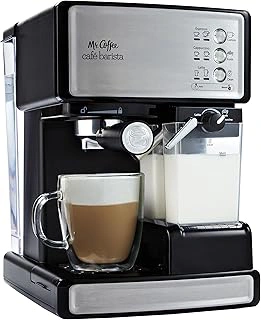
Mr. Coffee Programmable Espresso and Cappuccino Machine with Automatic Milk Frother
The Mr. Coffee Programmable Espresso and Cappuccino Machine offers a practical entry point for beginners who want convenience without a steep learning curve. Priced at $189.99, it sits comfortably under budget while delivering the core features most home users need: programmable settings and an automatic milk frother that handles cappuccinos and lattes with minimal effort.
This machine simplifies the workflow. You load the portafilter with ground coffee, select your shot size, and let the programmable controls handle timing. The automatic milk frother sits to the side and froths milk directly in your cup, removing the guesswork that comes with manual steam wands. For someone making their first cappuccino at home, this hands-off approach reduces frustration and speeds up the morning routine.
The 4.3/5 rating reflects its reliability for everyday use. Users appreciate the consistent extraction and the ability to dial in their preferred strength without fiddling with complex adjustments. The footprint is compact enough for most countertops, and the removable water reservoir and drip tray make cleanup straightforward.
Trade-offs exist. This is not a super-automatic bean-to-cup system - you'll need a separate grinder or pre-ground coffee. The automatic frother produces decent foam but lacks the texture control of a traditional steam wand. And while the build is solid for the price, it won't match the metal construction of higher-tier machines.
For beginners prioritizing ease of use, repeatable results, and a low entry cost, this machine balances capability and value. It handles milk drinks well, fits small spaces, and delivers reliable espresso shots without requiring barista skills.
- ✅ Automatic milk frother simplifies cappuccino and latte preparation
- ✅ Programmable controls for consistent shot timing
- ✅ Compact design fits most kitchen counters
- ✅ Removable water reservoir and drip tray for easy cleanup
- ✅ Priced at $189.99, well under budget
- ⚠️ Requires separate grinder or pre-ground coffee
- ⚠️ Automatic frother offers less texture control than manual steam wand
- ⚠️ Build materials are lighter than premium machines
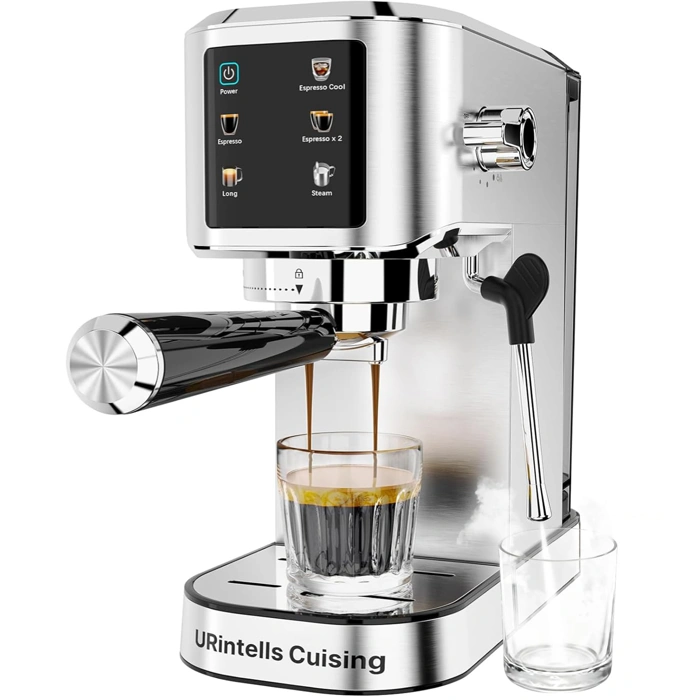
Stainless Steel 20 Bar Touchscreen Espresso Machine with Steam Milk Frother
At $109.99, this stainless steel touchscreen espresso machine offers the most accessible entry point in this guide. It features 20 bar pressure and a steam milk frother for manual milk preparation - two features that deliver functional espresso and steamed milk at a fraction of the price of higher-end super-automatic machines.
The touchscreen interface makes selecting brew options straightforward, and the compact stainless steel housing fits easily on smaller countertops. The 20 bar pressure system can extract espresso with good crema, though the grinder quality and consistency won't match the integrated burr systems found on more expensive models.
The steam wand requires manual technique to froth milk. Unlike the automatic cappuccino systems on the Philips multiple or DeLonghi Magnifica, you'll need to develop some skill to texture milk properly. This adds a learning curve but also gives you direct control over foam density and temperature.
Because this machine sits at the budget end of the spectrum, expect tradeoffs in build quality, grinder performance, and automation. The product has a 4.2/5 rating, suggesting generally positive user experience with some variation in long-term reliability. If you're testing whether you'll use an espresso machine regularly before committing to a larger investment, or if you primarily drink straight espresso and don't mind manual milk frothing, this represents a low-risk starting point.
This machine works best for beginners who want to learn espresso fundamentals without the financial pressure of a premium purchase, or for occasional users who value affordability over convenience features. If you plan to make multiple milk-based drinks daily or want true one-touch automation, the higher-priced machines in this guide will be more suitable.
- ✅ Most affordable option at $109.99
- ✅ 20 bar pressure system extracts espresso with good crema
- ✅ Touchscreen interface simplifies operation
- ✅ Compact stainless steel design fits smaller spaces
- ✅ Steam wand offers manual control over milk texture
- ⚠️ Manual milk frothing requires technique and practice
- ⚠️ Grinder quality and consistency below higher-priced models
- ⚠️ Build quality and long-term reliability trade-offs at this price point
- ⚠️ Lacks the automation and convenience features of true super-automatic machines
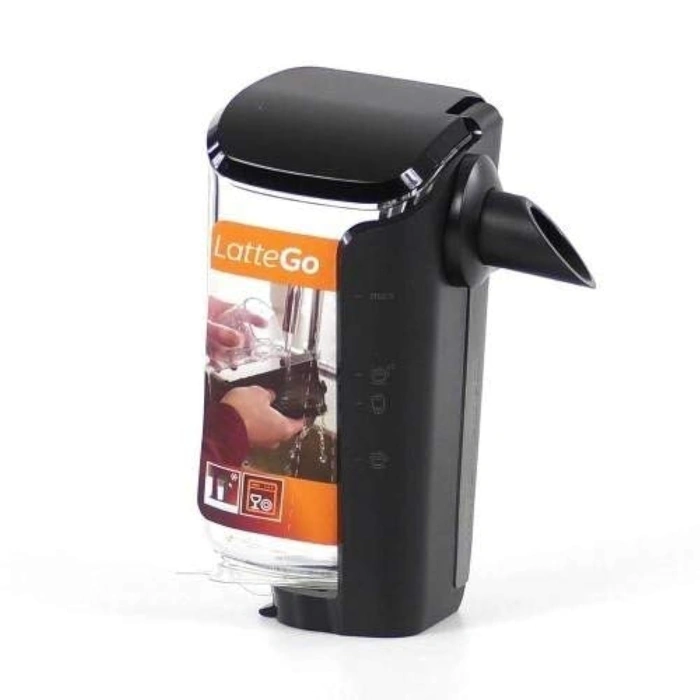
Philips LatteGo Espresso Machine Replacement Carafe
The Philips LatteGo Espresso Machine Replacement Carafe is a practical accessory for owners of compatible Philips LatteGo machines. Priced at $69.98, this replacement carafe offers a straightforward solution for maintaining milk system hygiene or keeping a backup on hand when the original wears out or requires cleaning.
The carafe features the same two-part construction as the original, designed for quick disassembly and easy rinsing. For households that use the milk frother frequently, having a spare carafe means you can rotate between brewing cycles without waiting for cleanup. The simple snap-together design reduces hard-to-reach crevices where milk residue can collect.
With a 4.7/5 rating, users appreciate the direct fit and familiar operation. This isn't a machine upgrade - it's a maintenance item that helps you keep your existing setup running smoothly. If you're brewing multiple milk drinks daily or want to extend the life of your Philips LatteGo investment, a replacement carafe is a low-cost way to maintain consistent performance and hygiene standards.
- ✅ Direct replacement for Philips LatteGo machines
- ✅ Two-part design simplifies cleaning
- ✅ Convenient backup for frequent milk drink users
- ✅ Maintains hygiene with easy rotation
- ⚠️ Only compatible with Philips LatteGo models
- ⚠️ Adds to ongoing accessory costs
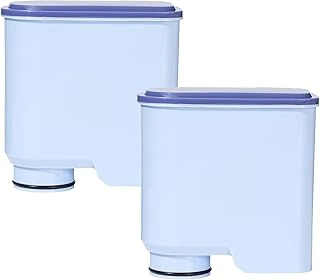
Philips Water Filter for Aqua-Clean Latte-Go 3200, 5400, 4300, 1200 Series
If you own a Philips LatteGo super-automatic espresso machine in the 3200, 5400, 4300, or 1200 series, the Philips Aqua-Clean water filter is a low-cost maintenance essential. Priced at $18.99 and rated 4.8 out of 5, this filter fits directly into your machine's water reservoir and helps maintain water quality while reducing the frequency of descaling cycles.
The Aqua-Clean system works by filtering impurities from your water before it reaches the brewing chamber. When used consistently and replaced according to your machine's prompts, it can extend the interval between full descaling sessions - saving you time and effort over the life of your machine. This is particularly useful for beginners who want to simplify routine maintenance.
Compatibility is straightforward: this filter is designed specifically for the LatteGo 3200, 5400, 4300, and 1200 series models. Check your machine's model number before ordering to confirm fit. The filter typically lasts for about 5,multiple cups or three months, depending on water hardness and usage volume. Your machine will alert you when it's time to replace it.
At under $20, this is a practical addition to your espresso setup. While it won't eliminate descaling entirely, it does make ownership more convenient by spacing out maintenance tasks. For Philips super-automatic owners looking to protect their investment and streamline upkeep, the Aqua-Clean filter is a sensible recurring purchase.
- ✅ Fits multiple LatteGo series models (3200, 5400, 4300, 1200)
- ✅ Affordable at $18.99 per filter
- ✅ Reduces descaling frequency when used consistently
- ✅ Machine alerts you when replacement is needed
- ⚠️ Only compatible with specific Philips LatteGo series machines
- ⚠️ Requires regular replacement every three months or 5,000 cups
- ⚠️ Does not eliminate the need for descaling entirely
Key Features to Consider Before You Buy
- Grinder type and adjustability: burr vs blade, grind settings available
- Milk system design: automatic frother, steam wand, or manual pitcher
- Cleaning requirements: removable brew group, automatic rinse cycles, descaling alerts
- Footprint and counter space: measure your available area before buying
- Water reservoir capacity: larger tanks mean fewer refills
- Customization options: brew strength, temperature, milk texture settings