We may earn a commission when you buy through links on this page, at no extra cost to you. How this works.
Most of us reach for coffee the moment we wake up, pour it into our favorite mug, and then do something that quietly sabotages the next eight hours: we grab our phone. Before the first sip is even finished, email notifications are streaming in, our to-do list is expanding, and the tiny creative spark that morning offers has already been smothered by someone else's agenda.
The problem isn't the coffee. It's what we allow to happen while we're drinking it.
Morning is the only time of day when your brain hasn't been colonized yet. Cortisol levels are high, your mind hasn't been shaped by other people's demands, and you have access to a kind of unburdened thinking that disappears the moment you start putting out fires. That first twenty minutes with a warm mug is a sacred window - not in a mystical sense, but in a practical one. It's the last chance you'll have all day to hear your own thoughts before the noise floods in.
Most productivity advice treats coffee as fuel: drink it, wake up, get to work. But the truth is that those quiet minutes before the chaos are worth protecting, not rushing through. When you pair your morning coffee with a simple brain dump routine instead of a scroll through your inbox, you create space for the kind of thinking that actually moves things forward - ideas that surface when you're not frantically reacting, problems that untangle when you give them a few minutes of uninterrupted attention.
This isn't about adding more to your morning. It's about defending the creative clarity you already have for fifteen minutes, before the day buries it. The coffee is already there. The mug is already warm. The only thing missing is a small ritual that turns passive caffeine consumption into a moment of mental triage - one that leaves you calmer, sharper, and less overwhelmed before you ever open a screen.
The Problem: How Screens and To-Do Lists Hijack Your Brain's Peak State
Most people reach for their phone or laptop within minutes of waking up, but that reflex comes at a steep cognitive cost. The brain's first hour is a rare window: cortisol is naturally high to promote alertness, yet the prefrontal cortex is still relaxed and open to creative synthesis. When you flood that window with blue light, push notifications, and a dense task list, you trigger a second cortisol spike that shifts your nervous system into reactive mode before you've had a chance to think independently.
Digital task lists and email threads force your brain into triage mode. You start categorizing, prioritizing, and mentally rehearsing responses, which narrows attention and activates the same neural pathways used for threat assessment. This premature focus on urgency fragments the associative thinking that makes mornings ideal for problem-solving and idea generation. The result is a day that feels busy but shallow, where you respond to demands rather than set direction.
Blue light exposure before 9 a.m. also suppresses residual melatonin and disrupts the natural cortisol taper, leaving you wired but not clear-headed. Notifications compound the effect by scattering attention across multiple contexts - a Slack message, a calendar reminder, a news alert - before your brain has established a single, coherent thread. This context-switching burns working memory and primes you for overwhelm long before the workday officially starts.
The brain dump routine protects that morning window by giving your thoughts a structured outlet that doesn't depend on screens or urgency. Writing by hand during coffee keeps your attention inward and your cortisol curve smooth, so creativity and clarity stay intact when you do open the laptop.
The Solution: The Power of the 'Warm Mug Brain Dump'
The Warm Mug Brain Dump is a deliberate pairing of two simple acts: drinking your morning coffee and writing down whatever is crowding your mind, without structure or editing. The practice happens before you check email, scroll feeds, or open a single tab. You sit with your coffee, a notebook, and nothing else.
The goal is to externalize the stream of tasks, worries, ideas, and reminders that wake up with you. Writing them on paper moves them out of working memory, freeing up mental space before the day adds more input. The coffee provides a warm, slow anchor that makes the act feel less like a chore and more like a pause you control.
This is not journaling with prompts or gratitude lists. It is unfiltered transfer: whatever surfaces goes on the page. Incomplete sentences, question marks, random words. The lack of structure protects the flow. You are not solving problems yet; you are clearing the board so you can see what actually matters once the noise settles.
The timing matters as much as the method. Morning working memory is finite. Once screens enter the picture, your attention shifts to reactive mode - notifications, other people's priorities, the pull of urgency. The Warm Mug Brain Dump claims that narrow window when your mind is still yours, before external demands take the wheel.
The coffee itself plays a functional role. Sipping something warm slows you down and signals to your body that this moment is not rushed. The caffeine starts working while you write, so by the time you finish the dump, your focus is sharpening and your mental desktop is clear. You move into the rest of your morning with fewer tabs open in your head.
The Science: How Externalizing Thoughts Clears Your Mind
Your brain can only hold a limited number of active thoughts at once - typically around four to seven distinct items in working memory. When you wake up with a jumble of tasks, worries, and half-formed ideas competing for attention, that mental load creates a this product. You feel busy, but you're not actually making decisions or solving problems; you're just cycling through the same loops.
Writing these thoughts down moves them from internal rehearsal to external storage. Once they're on paper, your working memory is freed up for higher-order thinking: making connections, evaluating priorities, and generating new ideas. This shift is what allows creativity to surface. Instead of using mental energy to remember the dentist appointment or the email you need to send, you can direct that capacity toward the work that matters.
The act of externalizing also interrupts rumination. When a worry or to-do stays internal, your brain treats it as unfinished business and keeps circling back. Capturing it in writing signals closure - even if the task itself isn't done yet - and reduces the cognitive interference that fuels overwhelm. You're not ignoring responsibilities; you're organizing them so they stop hijacking your focus.
This is why the brain dump works best before you check your phone or open your laptop. Once external stimuli flood in - notifications, headlines, other people's priorities - your attention shifts from intentional to reactive. The morning window, paired with coffee, offers a rare chance to clear the backlog and set your own mental agenda before the day sets it for you.
How to Do the Warm Mug Brain Dump: A Step-by-Step Guide
Starting a brain dump routine alongside your morning coffee takes fewer than five minutes to set up and can shift the entire tone of your day. The process is deliberately simple: brew your coffee as usual, then carry it to a spot away from your phone, laptop, or any screen. A quiet corner of your kitchen table, a chair by the window, or even a spot on your porch works well.
Set a timer for five to ten minutes. This boundary keeps the practice from stretching into open-ended journaling and helps you commit without feeling trapped. Once the timer starts, write down everything that surfaces in your mind - tasks you forgot yesterday, worries about an upcoming meeting, ideas for a project, fragments of dreams, grocery lists, or half-formed creative thoughts. The goal is not organization or eloquence. You are emptying the mental cache, not drafting prose.
Do not edit, cross out, or judge what appears on the page. If your mind skips between unrelated topics, follow it. If the same thought loops three times, write it three times. The lack of structure is the tool: it signals to your brain that this space is safe for unfiltered output, which loosens the grip of mental clutter and frees up attention for the work that matters later.
When the timer sounds, close the notebook without rereading. This step is important. Reviewing what you wrote reactivates the mental load you just offloaded. Instead, pick up your coffee - still warm - and sip it slowly. The few minutes that follow often feel quieter and more spacious than usual, because your working memory is no longer juggling invisible obligations.
Repeat this sequence daily, ideally at the same time each morning. Consistency trains your brain to anticipate the release, which makes the dump faster and more effective over time. Keep the notebook and pen in the same spot so you eliminate friction. The easier the setup, the more likely the routine sticks.
What to Capture in Your Morning Brain Dump
- Urgent work tasks or deadlines floating in your mind
- Random ideas or creative sparks from yesterday
- Personal to-dos like grocery items or errands
- Worries, anxieties, or anything causing mental friction
- Things you want to remember but don't need to act on yet
- Questions you need to answer or decisions to make later
When Pen and Paper Aren't Enough: Moving From Brain Dump to Action
A handwritten brain dump clears your head, but what happens when you need those scattered thoughts in a searchable format? Some mornings, you'll capture ideas worth saving - project seeds, problem-solving notes, or references you'll want to revisit - and retyping them later kills momentum and adds friction you don't need.
The gap between pen and digital isn't the medium itself. It's the effort required to bridge them. If you wait until evening to transcribe, context fades. If you type during the dump, you shift back into editor mode and lose the free-association benefit that made the exercise valuable in the first place.
One practical middle ground: snap a photo of your pages immediately after your coffee finishes. Drop the image into a note or task app that supports optical character recognition, and the text becomes searchable without manual retyping. You preserve the unfiltered quality of the handwritten session while keeping the door open for later organization.
Another option is to reserve the last two minutes of your routine for a quick verbal capture. Record a voice memo summarizing any actionable threads or recurring themes from your pages. Speaking the summary aloud forces you to distill without over-editing, and transcription tools handle the rest.
The goal isn't to convert every brain dump into a polished document. Most pages should stay ephemeral - written, acknowledged, and discarded. But when something genuinely matters, having a low-friction path from paper to action prevents good ideas from dying in a notebook you'll never open again.
Wispr Flow free month
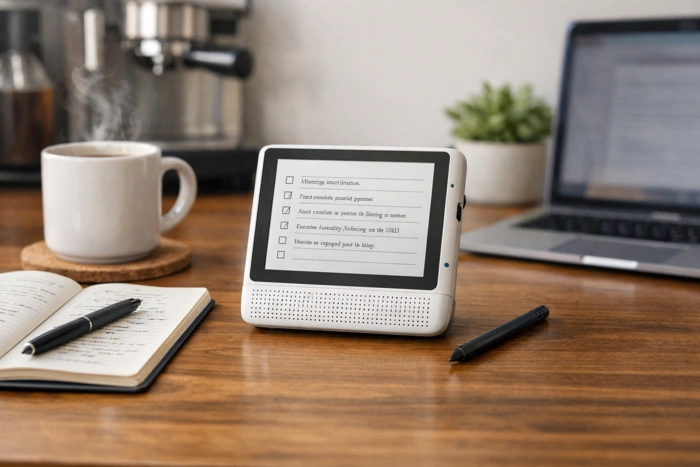
Once you've finished your pen-and-paper brain dump, those handwritten pages still need to become action. Typing everything back into your task manager or notes app can feel like double work, especially when your coffee is still warm and your brain is ready to move forward.
Wispr Flow offers a way to bridge that gap with voice-to-text accuracy that goes beyond the usual dictation tools built into your phone. Instead of wrestling with misheard words or awkward phrasing, you can speak naturally and get clean text output that's ready to use. That makes it easier to capture follow-up thoughts, expand on something from your brain dump, or just get ideas out of your head when your hands are occupied with your mug or other morning tasks.
The author is currently using Wispr Flow across multiple devices - phone, personal computer - to explore how hands-free text capture can reduce friction in daily routines. The goal is to find practical ways to externalize thoughts when hands are full or when switching from analog to digital feels like too much effort. It's not a replacement for the brain dump itself, but it can help you act on what you've written without breaking the rhythm of your morning.
For people who like the clarity of writing by hand but need a faster way to organize or expand those thoughts later, voice-to-text with better accuracy can lower the barrier between idea and execution.
Get one month of Wispr Flow free
This works best after you've built the habit of regular brain dumps. The value is in reducing the retyping step, not in replacing the act of writing itself. If you find yourself avoiding digital capture because it feels like extra work, this might remove enough friction to make follow-through easier.
Get one month of Wispr Flow freeMaking the Routine Stick: Tips for Consistency
A morning routine only works if it happens consistently, and the brain dump is no exception. The easiest way to ensure it sticks is to remove as many friction points as possible before your willpower is tested at dawn.
Set up your notebook and pen the night before, placing them next to your coffee maker or kettle. This simple act of staging removes one small decision from your morning and makes it much easier to follow through when you're still groggy. Brew your coffee the same way each morning - same method, same mug, same chair if possible. Repetition builds the associative cue your brain needs to slip into the routine without resistance.
Keep a timer visible on the counter or table where you'll sit. Seeing it reinforces the boundary and helps you start without negotiating how long you'll write. Five minutes is enough. You don't need to fill three pages or produce profound insights. The goal is to show up, not to perform.
Most importantly, don't judge the quality of what you write. Morning pages are messy by design. Some days you'll scribble mundane to-do items, other days you'll uncover a creative breakthrough. Both are valuable because the act of writing - not the content - is what clears the mental clutter and protects your focus for the hours ahead.
Track your streak if it helps. Mark an X on a calendar after each session, or note the date in your journal. Consistency matters far more than perfection, and missing one morning doesn't undo the habit. Just return to the notebook the next day and keep going.
What Happens After the Brain Dump
Once you close the journal or notebook, the mental shift is immediate. Your mind stops holding onto the scattered thoughts and half-formed worries that typically crowd the first hour of the day. Instead of carrying that invisible weight into email, Slack, or your task list, you step into focused work with a quieter internal dialogue. Intrusive thoughts still appear, but they lose their grip because you already gave them space on paper.
This routine creates a buffer between waking up and reacting to the world's demands. You gain a sense of control not because everything is solved, but because you mapped the mental terrain before anyone else could claim your attention. The goal is clarity, not completion. Some items on your brain dump will never make it to a to-do list, and that's exactly the point. By separating what matters from what simply showed up in your head, you protect the creative and strategic thinking that disappears the moment screens take over.