We may earn a commission when you buy through links on this page, at no extra cost to you. How this works.
AirScape Planetary Design Stainless Steel Coffee Canister with Plunger Lid (Medium, Matte Black)
Four proven canisters that stop stale coffee before it starts.
Use the matching tool first
Start with Coffee Brew Ratio Calculator if you want to narrow the fit before checking current offers.
Fresh coffee beans lose their flavor within days when oxygen, moisture, light, and heat break down the aromatic oils. An airtight coffee canister slows that stale process by sealing out air and protecting beans from humidity, extending peak flavor from a few days to several weeks.
Not every canister delivers the same level of protection. Vacuum-sealed models remove trapped oxygen after you close the lid, giving roasted beans the longest shelf life. Plunger-lid designs use a silicone gasket and manual compression to push out air before sealing. Screw-top canisters with rubber gaskets offer a simpler, less expensive seal that still outperforms a bag clip or rolled-down bag.
The four picks below cover different seal mechanisms, capacities, and budgets. If you buy beans weekly and want maximum freshness, a vacuum canister makes sense. If you prefer a quick open-and-close routine and drink coffee fast enough that beans don't sit for weeks, a plunger or screw-top model will do the job. Capacity matters too: a 16-ounce canister fits a standard retail bag, while larger models suit bulk buyers or households brewing multiple pots each day.
Each canister type involves tradeoffs between seal strength, ease of use, and price, so matching the design to your brewing frequency and storage habits will give you the best value.
Why Coffee Beans Go Stale (And How Canisters Stop It)
Coffee beans start losing their freshness the moment they're roasted. Oxygen is the main culprit - when it makes contact with the oils in roasted beans, a process called oxidation begins. Those aromatic compounds that give your coffee its flavor and aroma break down, leaving behind dull, flat-tasting brews. Within weeks of roasting, beans exposed to air can lose most of their character.
Moisture is the second threat. Beans are porous, and when they absorb humidity from the air, they become soft and lose structural integrity. This speeds up staling and can introduce off-flavors. In humid kitchens or during seasonal changes, unprotected beans degrade faster.
Light - especially direct sunlight and UV rays - accelerates the breakdown of oils and volatile compounds. Even ambient kitchen light slowly degrades bean quality over time. Beans stored in clear containers near windows or under bright fixtures suffer noticeable flavor loss.
Airtight canisters address these problems with specific design features. A true airtight seal - whether it's a silicone gasket, a vacuum plunger, or a one-way valve - blocks oxygen from reaching the beans. Opaque walls or UV-resistant materials shield beans from light exposure. Storing beans in a cool, dry canister keeps moisture out and preserves the oils that carry flavor.
The difference is measurable: beans kept in a quality airtight canister can stay fresh for three to four weeks after roasting, while beans left in a paper bag or loosely sealed jar may go noticeably stale in under two weeks. Choosing a canister that blocks all three enemies - oxygen, moisture, and light - gives you consistent flavor in every cup.
Key Features to Look for in a Coffee Canister
Seal type determines how well a canister blocks oxygen, which degrades coffee oils and aroma within days of roasting. Vacuum plunger lids let you pump out air after each use, offering the tightest seal but requiring several pumps every time you open the canister. Silicone gasket lids with twist locks or clamp mechanisms provide a reliable barrier without the manual effort, though they trap whatever air remains inside when you close them. Simple friction lids or loose-fitting caps allow oxygen exchange and rarely keep beans fresh beyond a few days.
Material choice affects durability, light exposure, and how much counter space you're willing to give up. Stainless steel blocks all light and resists dents, making it the most protective option for whole-bean storage. Ceramic canisters add visual appeal and block light just as well, but they chip if dropped. Glass designs with tinted or opaque coatings let you see bean levels at a glance, yet any clear window invites light degradation - even indirect kitchen light accelerates staleness when beans sit for more than a week.
Capacity shapes how you buy and use coffee. A canister that holds a full twelve-ounce bag means fewer transfers and less air exposure during storage, but it occupies more counter or cabinet space. Smaller canisters suit daily or bi-daily refills if you buy beans weekly, keeping the main bag sealed separately. Wide-mouth openings speed scooping but let more air in each time you reach inside, while narrow necks slow access and can trap grounds around the rim.
Tradeoffs matter in everyday use. A vacuum canister with a narrow opening protects beans best but adds friction to your morning routine. A glass jar with a loose gasket looks attractive on the counter and opens fast, yet beans lose peak flavor in under a week. Choose the seal and size that match how quickly you go through coffee and how much counter clutter you can tolerate.
Comparing the Four Canisters: Which Fits Your Routine?
Choosing the right canister comes down to how often you buy beans, how quickly you go through them, and what you value on your counter. The AirScape makes sense if you buy specialty coffee in larger quantities or open bags less than once a week - the dual-lid plunger system pushes residual air out after every use, which matters most when beans sit for ten days or more. It costs more and takes up vertical space, but the oxygen protection is the strongest in this lineup.
The KIVY vacuum canister delivers similar air removal at a lower price point, using a manual pump to create negative pressure. It works well for medium-volume users who want vacuum performance without the AirScape's price tag. The pump adds a step, and the plastic body is less durable than stainless steel, but the seal is effective and the capacity fits a standard 12-ounce bag.
STYLED SETTINGS balances everyday convenience with enough protection for beans consumed within a week. The silicone-ringed lid seals tightly without extra steps, the glass lets you see remaining supply at a glance, and the design suits visible countertop storage. It won't extend freshness as long as a vacuum or plunger system, but for regular brewers rotating through beans quickly, the tradeoff favors ease of access over maximum preservation.
The budget pick fits light coffee drinkers or households that prefer pre-ground coffee, where the shorter shelf life makes advanced sealing less critical. The clear body and simple lid offer basic protection from humidity and light at the lowest cost in this comparison. If you open the canister multiple times daily or keep it stocked for guests rather than daily ritual, this option avoids overpaying for features you won't use.
Your usage pattern decides the winner: high-volume or infrequent purchases favor AirScape, value-focused vacuum seekers choose KIVY, daily brewers who prioritize flow pick STYLED SETTINGS, and occasional drinkers save with the budget option. For specific questions about grind storage, freezer use, or multi-bag rotation, the FAQ section addresses those edge cases directly.
Frequently Asked Questions About Coffee Storage
How long do beans stay fresh in an airtight canister? Most whole beans hold peak flavor for two to three weeks after roasting when stored in a quality airtight container, and remain acceptable for up to a month. Ground coffee stales much faster because more surface area is exposed to oxygen, so even in a sealed canister, plan to use it within one to two weeks.
Can you store ground coffee the same way you store whole beans? Yes, the same airtight canisters work for ground coffee, but expect a shorter freshness window. Grinding breaks down cell walls and releases oils, which oxidize quickly regardless of the container.
Do vacuum canisters need maintenance? Check the valve seals every few months for cracks or wear. A damaged seal lets air seep back in, which defeats the vacuum. Most silicone seals last a year or more with normal use, but they're easy to replace if needed.
Should you freeze coffee beans for storage? Freezing works as a long-term backup if you portion beans into airtight bags and thaw them only once, but it's not practical for daily use. Temperature swings and condensation can degrade flavor faster than simply keeping beans in a good canister at room temperature.
Is a canister necessary if you buy small bags? Even small bags benefit from an airtight canister once opened. The original packaging often lacks a true seal, and beans begin to oxidize the moment you break that seal. A dedicated canister keeps what you have fresh until the bag runs out.
Final Verdict: Which Coffee Canister is Right For You?
Choosing the right airtight coffee canister depends on how much you brew, where you store your beans, and how much freshness insurance you want.
The AirScape Classic fits serious home brewers who buy premium single-origin or small-batch beans and want a proven two-lid system that pushes out oxygen with every use. The KIVY Vacuum Canister delivers active vacuum protection without the AirScape price, making it a smart pick when you want mechanical sealing on a tighter budget. STYLED SETTINGS brings counter appeal and a reliable plunger lid for brewers who keep their canister in plain sight and want something that doesn't look like lab equipment. The budget pick works for lighter drinkers, occasional coffee guests, or anyone testing whether an airtight canister really makes a difference before stepping up.
Pick the canister that matches your weekly bean volume and budget, then follow the storage checklist earlier in this guide to get the most life out of every bag.
How to Properly Store Your Coffee Beans
- Store whole beans, not pre-ground, to minimize surface area exposed to oxygen
- Keep canister in a cool, dark cabinet away from heat sources like ovens or direct sunlight
- Avoid refrigerator or freezer storage unless sealing beans for months; condensation accelerates staleness
- Fill canister to match your weekly consumption; don't leave large air gaps if you use beans slowly
- Burp or vacuum-seal canister immediately after opening to remove trapped air
- Buy beans in quantities you'll finish within two to three weeks for peak freshness
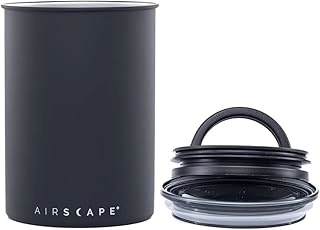
AirScape Planetary Design Stainless Steel Coffee Canister with Plunger Lid (Medium, Matte Black)
The AirScape Planetary Design Stainless Steel Coffee Canister uses a plunger lid that physically pushes air out of the chamber before locking, creating a seal that doesn't rely on gaskets or valves that can wear over time. The two-lid system - an outer cover and an inner plunger - means you manually displace oxygen each time you close the canister, rather than depending on a one-way valve or simple snap-on closure.
Rated 4.8 out of 5, this medium-sized matte black canister holds roughly one standard larger bag of whole beans. The stainless steel body resists dents and kitchen odors, and the plunger mechanism stays consistent over years of daily use because there are no thin membranes or springs to fail. You push the inner lid down until it contacts the beans, squeeze the air out through the top valve, then twist to lock.
At $44, the AirScape costs more than canisters with simple clamp lids or silicone seals. What you're paying for is the active displacement design and long-term durability: the plunger won't degrade, and you control exactly how much air remains in the canister each time you close it. The tradeoff is speed - opening and resealing takes a few extra seconds compared to flip-top or twist-cap designs, which may feel slow during a rushed morning routine.
If maximum oxygen removal matters more than convenience, and you want a seal mechanism that won't wear out, the AirScape's plunger system delivers consistent performance that simpler canisters can't match.
- ✅ Plunger lid physically pushes air out before locking
- ✅ Two-lid design with no valves or gaskets to wear over time
- ✅ Stainless steel body resists dents and odors
- ✅ 4.8/5 rating reflects strong durability and seal performance
- ⚠️ $44 premium price compared to simpler canister designs
- ⚠️ Slower daily access - plunger process takes extra seconds each time
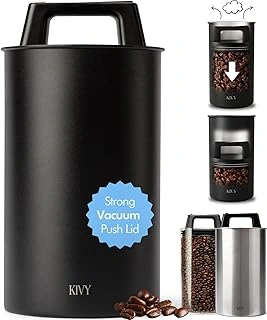
KIVY Stainless Steel Airtight Vacuum Coffee Canister for Beans & Grounds
Coffee drinkers who want vacuum-seal protection without spending forty dollars can consider the KIVY Stainless Steel Airtight Vacuum Coffee Canister, priced at $28.47. The pump-style vacuum mechanism requires a few manual strokes to evacuate air from the canister, then locks in place to maintain the seal. Unlike the passive one-way valve on the Airscape, this design asks you to actively create the vacuum each time you close the lid, but the tradeoff is a lower price point and the same goal: reducing oxygen exposure that degrades coffee oils and aroma compounds.
The stainless steel body resists moisture and odor absorption, and the canister accommodates both whole beans and ground coffee. With a 4.5 rating, most users report reliable vacuum hold between refills, though some note that the rubber valve seal benefits from periodic cleaning to maintain consistent suction. If dust or coffee oil accumulates around the valve, the pump may not draw as strong a vacuum, so a quick wipe every few weeks keeps performance steady.
Compared to the Airscape's plunger and glass Fellow Atmos, the KIVY sits between passive and premium. You trade the Airscape's effortless lid press for a few pump strokes, and you give up the Fellow's sleek aesthetic and twist-lock vacuum, but you gain a lower entry cost and a durable stainless canister that travels well. The pump mechanism adds a step to your routine, which matters if you open and close the container several times a day; for once-daily access or dedicated storage between brew sessions, the extra effort is minor.
The KIVY works best for daily coffee drinkers who prioritize vacuum-seal protection over speed or visual design. If you buy beans weekly and store them on the counter, the manual pump delivers real oxygen reduction at a budget-friendly price. If you value one-handed operation or want a canister that doubles as countertop décor, the Airscape or Fellow may justify the higher spend. For straightforward vacuum storage without the premium, this canister offers dependable performance as long as you keep the valve seal clean.
- ✅ Budget vacuum option at $28.47
- ✅ Manual pump creates effective vacuum seal
- ✅ Stainless steel resists moisture and odor
- ✅ Works for both beans and grounds
- ⚠️ Requires manual pumping each time you close the lid
- ⚠️ Valve seal needs periodic cleaning for consistent suction
- ⚠️ More effort than passive plunger designs
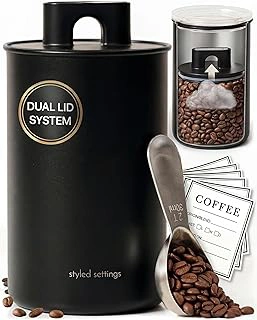
STYLED SETTINGS Matte Black Airtight Vacuum Coffee Canister with Scoop (1lb)
The STYLED SETTINGS Matte Black Airtight Vacuum Coffee Canister delivers a practical middle ground between visual appeal and vacuum-seal protection at $27.99. Rated 4.7 out of 5, this 1-pound capacity canister uses a simple plunger mechanism that evacuates air without the twist-lock complexity of some alternatives, making daily access straightforward even during rushed mornings.
The matte black finish integrates cleanly into modern kitchens, and the included scoop reduces the need for a separate measuring tool. The vacuum seal is activated by pressing the top button, which draws air out of the chamber and creates a tighter seal than basic flip-lid designs. While the mechanism is less robust than the heavier stainless models with internal lids that physically displace air, it operates more intuitively and requires less hand strength to open and close.
This canister fits well for users who move between drip and pour-over methods and want both countertop presence and functional oxygen reduction. The single-pound capacity suits households brewing one to three cups daily, though larger batch brewers may find themselves refilling frequently. The scoop nests inside the lid, keeping the workflow compact.
Compared to canisters with twist-lock seals, this model trades some mechanical longevity for ease of use. The plunger valve is simpler to operate but may wear faster under heavy daily cycling. For those who prioritize a clean aesthetic and straightforward vacuum operation without the heft or price of commercial-grade stainless designs, this canister balances form and function effectively.
- ✅ Simple plunger vacuum mechanism requires less effort than twist-lock alternatives
- ✅ Matte black finish suits modern countertop setups
- ✅ Includes measuring scoop that stores in the lid
- ✅ Mid-range price at $27.99 for vacuum-seal functionality
- ⚠️ Vacuum mechanism less robust than internal-lid displacement models
- ⚠️ 1-pound capacity may require frequent refilling for larger households
- ⚠️ Plunger valve may wear faster with heavy daily use
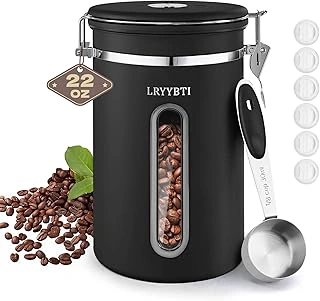
Stainless Steel Airtight Coffee Canister with Window & Scoop (22oz Black)
At $15.99, this 22-ounce stainless steel canister offers a practical entry point for home brewers who want basic freshness protection without the cost or complexity of vacuum systems. The transparent window runs the length of the body, letting you monitor bean levels and variety at a glance - a convenience that appeals to anyone juggling multiple origins or tracking inventory for reorders.
The seal relies on a silicone gasket between the lid and rim. This passive design keeps air exchange minimal during storage but does not actively remove oxygen the way plunger or vacuum mechanisms do. For beans consumed within two to three weeks, the gasket delivers adequate protection. Longer timelines, especially with light-roasted single origins that oxidize faster, will show diminished aroma and muted flavor notes as residual oxygen inside the canister interacts with the beans.
The window itself is a tradeoff. Visibility is useful, but the clear panel exposes beans to ambient light whenever the canister sits on a counter or open shelf. Light accelerates staling by breaking down oils and volatile compounds. If your storage spot receives direct sunlight or bright kitchen lighting for hours each day, that exposure will compromise freshness faster than an opaque vessel would. Placing the canister in a cupboard or pantry mitigates the issue, though at that point the window loses much of its practical advantage.
The included scoop attaches magnetically to the lid, eliminating the common problem of misplaced measuring tools. The 22-ounce capacity holds roughly the listed size of whole beans with room to scoop comfortably, or up to the listed size if you fill to the brim and accept tighter access. Build quality is straightforward: the stainless body resists dents and the gasket maintains its compression over typical use, though the window panel is thin enough that rough handling or a hard drop could crack it.
The 4.7 rating reflects satisfaction among buyers who prioritize convenience and cost over maximum preservation. This canister suits everyday drinkers rotating through beans quickly, households that value seeing their coffee supply, and anyone wanting a tidy countertop solution without investing in premium storage. It is not the right choice for collectors aging expensive microlots, anyone storing beans longer than a month, or setups where the canister will sit in bright light most of the day.
- ✅ $15.99 price point makes airtight storage accessible
- ✅ Transparent window shows bean level and variety without opening
- ✅ Silicone gasket seal protects beans consumed within two to three weeks
- ✅ Magnetic scoop attaches to lid for easy access
- ✅ 22-ounce capacity fits 12 - 18 ounces of beans depending on fill level
- ⚠️ Window panel exposes beans to light, accelerating staling on bright counters
- ⚠️ Passive gasket seal does not remove residual oxygen like vacuum systems
- ⚠️ Not suitable for long-term storage beyond one month
- ⚠️ Thin window material could crack if dropped