We may earn a commission when you buy through links on this page, at no extra cost to you. How this works.
You want better coffee at home on weekends without turning your kitchen into a lab or spending half your morning cleaning up. French press and pour over both promise smoother, richer flavor than a drip machine, but they deliver that promise in very different ways - and which one fits your routine matters more than you might think.
French press is fast and forgiving. You steep coarse grounds in hot water for four minutes, press the plunger, and pour. The metal filter lets coffee oils through, giving you a fuller body and bolder taste. Pour over takes more attention: you control the water flow over finer grounds through a paper filter, which creates a cleaner, brighter cup with more nuanced flavor notes.
The difference shows up in your cup and your counter. French press leaves sediment at the bottom and needs a scrub to get grounds out of the mesh. Pour over uses a disposable filter and rinses clean in seconds, but you'll spend three to four minutes standing at the kettle, pouring in slow circles. If you like a heavier, textured coffee and want minimal fuss in the morning, french press often wins. If you prefer clarity and don't mind the ritual, pour over rewards the extra effort.
This guide walks through taste, brewing steps, cleanup, and cost so you can decide which method matches your weekend coffee goals. We compare real attributes - body, sediment, brew time, filter types - without fluff or fake testing claims, and we point out the tradeoffs that matter when you're half-awake on a Saturday morning.
Use the matching tool first
Start with Coffee Brew Ratio Calculator if you want to narrow the fit before checking current offers.
What Is a French Press and How Does It Work?
A French press uses immersion brewing to extract coffee. You add coarse coffee grounds to a glass or stainless steel carafe, pour hot water over them, and let everything steep together for about four minutes. During that time, the grounds and water stay in full contact, which pulls oils, fine particles, and dissolved solids into the liquid. Once the timer runs out, you press a metal mesh plunger slowly down through the carafe. The mesh filter traps most of the grounds at the bottom while the brewed coffee stays above, ready to pour.
The metal mesh is much coarser than paper, so it lets coffee oils and tiny sediment pass through into your cup. That gives French press coffee a thick, full-bodied texture and a heavier mouthfeel compared to methods that use paper filters. The flavor is bold and often described as rich, with more visible body and a slightly gritty finish. Because the grounds sit in the water the entire time, extraction is even and forgiving, though leaving the coffee in the carafe too long can make it taste bitter or over-extracted.
The process is straightforward: heat water, measure coarse grounds, pour, wait, press, and pour into your mug. No special pouring technique or extra equipment is required. The tradeoff for that simplicity is cleanup - you need to scoop or rinse out wet grounds and wash the mesh filter after each use. The immersion method and metal filter are what make French press coffee taste and feel different from drip or pour-over brewing.
What Is a Pour Over Dripper and How Does It Work?
A pour over dripper sits on top of your cup or carafe and uses gravity to pull hot water through coffee grounds held in a paper or metal filter. You pour water slowly in a circular motion, usually from a gooseneck kettle, which gives you control over how fast the water contacts the grounds and how long extraction takes.
The paper filter traps oils and fine particles, so the coffee that drips through is clean and bright. You taste more of the distinct flavor notes in the beans - fruity, floral, or citrus characteristics come through clearly without the heavier body that oils add. The process takes three to four minutes for most recipes, and the slow, steady pour helps extract flavor evenly without over-extracting bitter compounds.
Because you control the water flow and pour pattern, you can adjust brew strength and taste with each cup. A faster pour shortens contact time and makes lighter coffee; a slower, more deliberate pour extends extraction and deepens flavor. This hands-on approach appeals to people who enjoy the ritual and want to fine-tune their results, but it does require attention and a bit of practice to keep your pour consistent.
Key Difference: Taste and Smoothness
The biggest difference between French press and pour over shows up in the cup. French press coffee tastes fuller and heavier because the metal mesh filter lets natural oils and fine particles stay in the brew. You'll notice a thicker mouthfeel and sometimes a bit of sediment at the bottom of your mug. That richness is what many people mean when they call French press coffee smooth - it coats your palate and delivers bold, straightforward flavor.
Pour over coffee tastes cleaner and lighter. Paper filters trap the oils and virtually all sediment, so each sip feels crisp and clear. The flavor is more nuanced: you can pick out individual tasting notes more easily, especially with single-origin beans. When pour over drinkers talk about smoothness, they mean clarity - a cup free of grit or heaviness.
Neither method is objectively smoother. French press gives you rich-smooth: a velvety body with assertive flavor and texture you can feel. Pour over gives you clean-smooth: a transparent cup that highlights subtle flavors without any sediment. If you prefer bold, full-bodied coffee and don't mind a little texture, French press will feel smoother to you. If you want a delicate, tea-like clarity where nothing interferes with the taste, pour over will seem smoother.
Your bean choice matters, too. Darker roasts amplify the heavy body of French press, while lighter roasts show off their complexity better in a pour over. The grind also plays a role: French press needs coarse grounds to avoid over-extraction and this product, while pour over works with medium grounds for balanced extraction. Both methods can produce excellent coffee, but the smooth you get from each is fundamentally different.
Key Difference: Brewing Process and Daily Ease
The brewing process separates these two methods most clearly. French press follows a straightforward routine: add coarse coffee grounds, pour hot water over them, wait four minutes, then press the plunger down to separate the grounds from the brewed coffee. The method tolerates small timing variations and doesn't demand precision pouring, which makes it easier for early mornings or relaxed weekends when you'd rather not concentrate on technique.
Pour over requires more attention. You wet the grounds with a small amount of water, wait 30 seconds for bloom, then pour the remaining water in a slow, steady spiral over the next two to three minutes. Pouring speed and pattern directly affect extraction: too fast and the coffee tastes weak, too slow and it can turn bitter. Consistency improves with practice, but the learning curve is steeper than pressing a plunger.
Time investment differs as well. French press brewing takes about four minutes of passive waiting after you add the water. Pour over demands three to four minutes of active pouring and attention, though total brew time is similar. If you're brewing coffee while making breakfast or reading, french press lets you step away. Pour over keeps you at the counter, kettle in hand, controlling the flow.
Forgiving versus precise captures the tradeoff. French press absorbs small mistakes in grind size, water temperature, or timing without ruining the cup. Pour over rewards careful technique with cleaner flavor but punishes inconsistency with uneven extraction. For weekend brewing when you want good coffee without mental effort, french press wins on ease. For those who enjoy the ritual and want to refine their control over flavor, pour over offers that hands-on satisfaction.
Key Difference: Cleanup and Maintenance
Cleanup effort can make or break your weekend coffee routine, especially when you're still waking up or hosting friends who expect a quick turnaround between rounds.
The French press demands more hands-on work. After you plunge and pour, wet coffee grounds cling to the carafe walls, settle around the mesh filter, and often stick to the plunger assembly. You'll need to knock the puck into the compost or trash - sometimes it crumbles, sometimes it doesn't - then rinse every part under running water. The fine mesh screen traps oils and micro-grounds, so a quick rinse rarely cuts it; skip a thorough scrub and you'll taste yesterday's coffee in tomorrow's cup. Disassembling the plunger every few brews to clean the filter plates adds another step, and the metal screen can stain over time if you don't stay on top of it.
Pour over cleanup is faster and tidier. Lift the paper filter with all the grounds inside, toss it in the compost or trash, and give the dripper a quick rinse. No scrubbing, no grounds stuck in crevices. The cone itself - ceramic, plastic, or glass - wipes clean in seconds because the filter kept coffee oils and sediment away from the surface. If you use a reusable metal or cloth filter instead of paper, cleanup becomes closer to the French press experience: rinsing out trapped grounds and dealing with residual oils.
Daily friction matters when you brew every morning. The French press adds two to three extra minutes of washing and drying, and it's messier if you're in a hurry. Pour over with paper filters keeps your hands clean and your sink clear. Long-term maintenance flips the script slightly: paper filters cost money over time, while a well-maintained French press only needs occasional deep cleaning and a replacement screen every year or two if the mesh warps. A ceramic pour over dripper can last decades without wearing out, but you're buying filters every month.
If you value speed and simplicity after you've finished your coffee, pour over with disposable filters wins. If you'd rather avoid ongoing filter costs and don't mind a bit of scrubbing, the French press is manageable once you build the habit.
Key Difference: Cost and What You'll Need
Getting started with either method doesn't require a large investment, but the cost structures differ in ways that matter over time.
A French press is a one-time purchase, typically ranging from $20 to $50 for a durable glass or stainless steel model. You won't need paper filters, which keeps recurring costs to zero. The trade-off is that coarse, even grinds matter more for French press brewing, so if you're using a blade grinder or pre-ground coffee, you may want to budget for a burr grinder to get consistent results. That can add $30 to $100 or more to your initial outlay, but it's a tool that improves coffee across any method.
Pour over drippers are inexpensive - many ceramic or plastic models cost $10 to $30. The recurring expense comes from paper filters, which run about $5 to $10 for a pack of 100, depending on size and brand. Over a year of weekend use, that adds up to roughly $15 to $30. A gooseneck kettle makes pouring easier and more controlled, but a standard kettle works if you pour carefully. Gooseneck models start around $25 and go up from there.
If you already own a grinder and kettle, a French press has the lower total cost to start and maintain. If you're building a setup from scratch, pour over may cost less up front, but filters will create a small ongoing expense that a French press avoids entirely.
Verdict: Which Method Makes Smoother Coffee?
Smoothness means different things depending on what you enjoy in your cup. Pour over delivers a cleaner, brighter kind of smooth - free of sediment, with clarity that lets individual flavor notes stand out. French press offers a richer, heavier smoothness, with body and oils that coat your palate and deliver a fuller mouthfeel.
If you prefer coffee that feels light and crisp, and you don't mind spending a few minutes on the pour technique, pour over is the better fit. The paper filter removes fine particles and most of the oils, which results in a cup that many describe as transparent or delicate. That clarity can highlight fruity or floral notes in lighter roasts, making pour over especially rewarding when you want to taste the origin character of the beans.
French press suits you if you want coffee that feels substantial and you value convenience over precision. The metal mesh leaves oils and micro-grounds in the brew, creating texture and depth. It's forgiving with timing and grind consistency, and you won't need to buy filters. The tradeoff is a bit of sediment at the bottom of your mug and a heavier body that can obscure subtler flavors.
Cost and cleanup also matter for weekend routines. French press has no recurring expense after the initial purchase, and most models disassemble for a quick rinse. Pour over requires paper filters - usually a few cents each - and the dripper needs attention to prevent clogging. Neither method is difficult, but pour over adds an extra step in both brewing and maintenance.
Choose pour over when you want a refined, tea-like smoothness and enjoy the ritual of a controlled pour. Choose french press when you want bold, full-bodied smoothness without fuss, and prefer to skip the filter budget and technique curve. Both methods make excellent coffee; your answer depends on whether you prioritize clarity or body, and how much hands-on time you want to invest on a Saturday morning.
What About Pour Over Gear?
Pour over brewing requires a few specific pieces of gear beyond your kettle and coffee. You'll need a dripper - cone or flat-bottom - plus paper or metal filters that match its shape. A gooseneck kettle gives you the narrow, controlled pour that keeps water flowing evenly over the grounds, which matters more here than with French press.
Most drippers cost between $20 and $40, filters run a few cents each, and a decent gooseneck kettle starts around $30. The total setup is comparable to a quality French press, but the ongoing filter cost adds up if you brew daily.
If pour over sounds like your preference, a dedicated gear guide walks through dripper materials, filter types, and kettle features in detail so you can match the equipment to your routine and budget.
Which Brewer Is Right for Your Weekend?
Your weekend brewer comes down to the coffee you prefer and how much technique you want to invest. If you want rich, full-bodied coffee with minimal fuss and zero recurring costs, a french press is the straightforward choice. You add coarse grounds, hot water, wait four minutes, press, and pour. The steel mesh filter lets oils and fine particles through, which gives you that thicker mouthfeel and deeper flavor. Cleanup is quick if you knock out the grounds first, and there's nothing to buy after the initial brewer.
Pour over suits you if you value clean, bright coffee and enjoy the ritual of pouring. The paper filter traps oils and sediment, so the cup tastes lighter and more tea-like, with individual flavors standing out more clearly. The downside is you'll need to practice your pouring technique - speed and pattern matter - and you'll buy filters regularly. It takes a bit longer, and you need a gooseneck kettle for good results, but the clarity in the cup is the reward.
Both methods deliver better coffee than automatic drip or single-serve pods, so either one is an upgrade. French press favors convenience and body; pour over favors clarity and control. Pick the cup profile that matches your taste and the morning pace that matches your weekend.
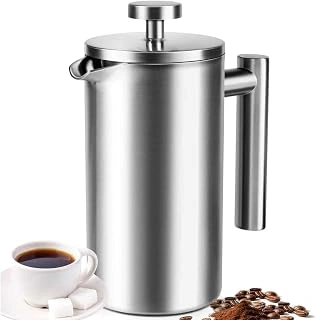
34 oz Full Stainless Steel Double-Walled Insulated French Press
If you want a first French press that keeps coffee hot and withstands daily use, the 34 oz Full Stainless Steel Double-Walled Insulated French Press delivers straightforward reliability at $20.48. The double-wall insulation holds temperature longer than single-wall glass carafes, which means your second cup stays warm without a separate warmer or reheating.
Stainless steel construction reduces the fragility of glass French presses. You can place it on the counter, rinse it in the sink, and pack it for a weekend cabin trip without worrying about cracks or chips. The 34-ounce capacity brews four to five cups, making it practical for two people or a slow Sunday morning alone.
The design stays simple: coarse grounds steep in hot water, you press the plunger, and you pour. No paper filters to buy, no pouring technique to learn. The full immersion brewing produces the bold, full-bodied flavor French press is known for, with the natural oils and fine particles that paper filters remove.
Cleanup requires rinsing the mesh filter and carafe after each use. Some sediment will settle at the bottom of your cup - expected with metal mesh filters - but the tradeoff is richer body and no disposable waste. The stainless steel resists staining better than plastic components, and all parts disassemble for thorough washing.
With a 4.7/5 rating, this French press offers a dependable entry point without the premium price of boutique models. It handles the basics well: keeps coffee hot, brews full-flavored coffee, and lasts beyond the first few months of weekend use.
- ✅ Double-wall insulation keeps coffee hot longer than glass carafes
- ✅ Stainless steel construction resists chips and cracks
- ✅ 34-ounce capacity brews four to five cups
- ✅ Simple design with no learning curve
- ✅ Affordable at $20.48
- ⚠️ Metal mesh allows fine sediment into the cup
- ⚠️ Requires rinsing filter and carafe after each use
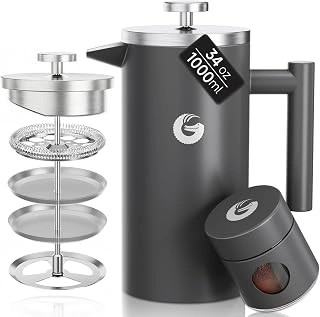
Coffee Gator 34 oz Gray Double Wall French Press with 4-Layer Filter
The Coffee Gator 34 oz Gray Double Wall French Press addresses one of the most common complaints about french press coffee: sediment in the final cup. Its 4-layer filtration system traps more fine grounds than standard single-screen presses, delivering a cleaner brew while preserving the body and oils that make french press coffee distinctive.
Double-wall insulation keeps your coffee hot longer - useful when you're making a full pot for a weekend morning and want it to stay warm through refills. The 34-ounce capacity brews about four standard mugs, making it practical for couples or small gatherings without requiring back-to-back batches.
The gray stainless steel build feels solid and resists the chips and cracks you might see with glass carafes over time. Cleanup is straightforward: disassemble the 4-layer plunger, rinse out the grounds, and wash the components. The filtration system does have more parts than a basic press, so expect a few extra seconds at the sink.
This press suits readers who enjoy the rich, full flavor of french press coffee but find the typical grittiness distracting. The 4-layer filter won't eliminate every particle - french press method still allows some sediment by design - but it noticeably reduces the amount that reaches your mug. If you want french press character with a smoother finish and don't mind a slightly higher price point, the Coffee Gator balances those priorities well.
- ✅ 4-layer filtration system reduces sediment for cleaner cups
- ✅ Double-wall insulation keeps coffee hot through multiple servings
- ✅ 34-ounce capacity brews about four mugs
- ✅ Durable stainless steel construction resists damage
- ⚠️ More filter components mean slightly longer cleanup
- ⚠️ Higher price than basic single-screen presses