We may earn a commission when you buy through links on this page, at no extra cost to you. How this works.
Morning coffee shouldn't force you to choose between speed and quality, yet that's the exact tradeoff most busy people face with drip machines or instant granules. If you've been eyeing manual brewers but worry about time, the French Press and AeroPress sit at opposite ends of the convenience spectrum - both skip the machine, both deliver full-flavored coffee, but they approach the morning rush in very different ways.
The French Press uses a simple steep-and-plunge method that yields multiple cups at once, making it a natural fit for households or anyone who wants a full carafe ready to go. The AeroPress, by contrast, brews a single concentrated cup in under two minutes and cleans up in seconds, designed explicitly for speed and portability. Neither requires filters you'll run out of or complex maintenance, but the differences in brew time, cleanup effort, and serving size mean one will slot into your routine far more smoothly than the other.
This guide walks through a direct comparison of brewing speed, taste profile, cleanup, durability, and portability so you can match the right brewer to your actual morning constraints. Whether you need to grab coffee and run or prefer a slow sip with a second cup on standby, the choice comes down to how much time you have and whether you're brewing for one or feeding a household.
Use the matching tool first
Start with Coffee Brew Ratio Calculator if you want to narrow the fit before checking current offers.
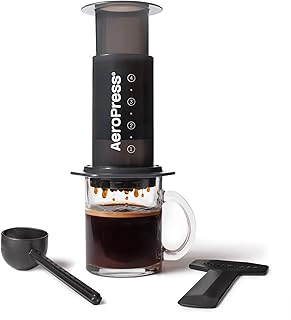
AeroPress Original Coffee Press Manual Brewer
The AeroPress Original Coffee Press delivers a single serving of smooth, rich coffee in about two minutes from start to finish. Priced at $39.95 with a 4.6/5 rating, this manual brewer has built a loyal following over two decades thanks to its consistent results and compact footprint.
The design is straightforward: a durable plastic chamber, plunger, filter cap, and stirrer. You add ground coffee, pour hot water, stir for ten seconds, then press. The resulting the listed size of coffee is clean and full-bodied, with fine paper filters catching sediment and oils. The brewer ships with multiple filters, enough to get you through nearly a year of daily use before ordering more.
Cleanup is fast. Pop the filter cap, press the puck into the trash or compost, and rinse the chamber. Most mornings, the entire process - from grounds to clean counter - takes under three minutes. The plastic body is light and nearly indestructible, making it a practical choice for travel, office desks, or tight kitchen spaces where a bulky carafe doesn't fit.
This model suits solo drinkers who want control without complexity. If you're brewing for two or more people at once, you'll need to repeat the process, which adds time. But for one person rushing through a weekday morning, the AeroPress Original balances speed, quality, and simplicity in a way few brewers match.
- ✅ Brews 6-10 oz in under 2 minutes
- ✅ Cleanup takes about 30 seconds
- ✅ Durable, lightweight plastic body travels well
- ✅ Includes 350 paper filters to start
- ✅ Compact footprint for small kitchens
- ⚠️ Single-serve only; brewing for multiple people requires repeating the process
- ⚠️ Requires paper filters, which add ongoing cost
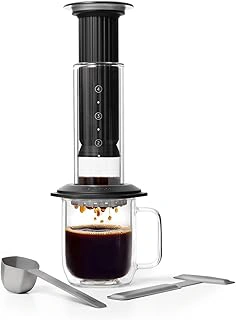
AeroPress Premium all-in-One French Press, Pour-Over & Espresso-Style Coffee Maker, Black
The AeroPress Premium all-in-One French Press, Pour-Over & Espresso-Style Coffee Maker offers three brewing methods in a single device, priced at $199.95 with a 4.3/5 rating. This brewer lets you prepare espresso-style concentrate, immersion coffee similar to a French press, or a pour-over style brew depending on your mood or morning schedule.
The multi-method design suits coffee drinkers who want flexibility without buying separate devices. If you enjoy experimenting with different brewing styles or share your kitchen with people who prefer different strengths and flavor profiles, this brewer adapts to those needs. The espresso-style setting produces a concentrated shot you can dilute or drink as-is, while the immersion mode delivers a fuller-bodied cup like a traditional French press. The pour-over option gives you a lighter, cleaner result when you want it.
At nearly multiple, this is a premium investment compared to a standard AeroPress or basic French press. It makes sense if you genuinely value having multiple brewing options in one compact footprint. If your mornings follow a consistent routine and you already know you prefer one brewing style, a single-purpose brewer will serve you better at a lower cost. The complexity adds capability but also means more parts to understand and clean, so the tradeoff is real.
This brewer works best for users who appreciate brewing as a small ritual rather than a rushed task, and who want the freedom to switch methods without cluttering the counter. For strictly fast mornings with one preferred method, simpler tools deliver the same speed with less overhead.
- ✅ Three brewing methods in one device
- ✅ Compact footprint for multiple brew styles
- ✅ Adapts to different strength and flavor preferences
- ⚠️ $199.95 price point is a premium investment
- ⚠️ More parts and complexity than single-method brewers
- ⚠️ Overkill if you only use one brewing style
What is a French Press? The Classic Immersion Brewer
A French Press steeps coarse coffee grounds directly in hot water, letting them sit together for about four minutes before you push down a metal plunger to separate the brewed coffee from the grounds. That full immersion creates a thick, full-bodied cup with more oils and fine particles than paper-filtered methods allow.
The metal mesh filter is key to the taste profile. It blocks most grounds while letting natural coffee oils pass through, which gives you a heavier mouthfeel and deeper flavor. You can taste the difference compared to drip or pour-over - it's bolder and more textured.
Most French Press models hold between 32 and 51 ounces, so you can brew multiple cups at once without starting over. That batch capacity makes mornings faster when you need coffee for two people or want a travel mug plus a mug at home. The glass carafe lets you watch the brewing process, and the simple three-piece design - carafe, plunger, and lid - means no filters to buy and no complicated parts.
The tradeoff is sediment. Some fine grounds always slip through the mesh, settling at the bottom of your cup. If you prefer crystal-clear coffee, that texture might bother you. Cleanup also takes a minute: you need to scoop or rinse out wet grounds stuck to the mesh, and the glass carafe requires gentle handling to avoid chips or cracks.
What is an AeroPress? The Modern, Versatile Press
The AeroPress uses fine coffee grounds that steep for just one to two minutes before you press the brew through a paper filter directly into your mug. This short contact time and fine grind pull out bold flavor quickly, while the filter traps oils and sediment for a remarkably clean cup.
Each brew produces six to ten ounces - enough for a single serving - which makes the AeroPress a natural fit for mornings when only one person needs coffee or when you want precise control over every cup. The compact cylinder of durable plastic takes up minimal counter space and survives the jostling of a suitcase or backpack, so you can brew the same cup at home, in a hotel, or at the office.
Because the paper filter removes most of the fine particles and oils, the finished coffee tastes lighter and brighter than French Press coffee, with less body but more clarity. You taste individual flavor notes rather than a heavier, textured mouthfeel. That clean profile appeals to anyone who prefers tea-like this product or wants to avoid sediment in the bottom of the mug.
The entire press disassembles in seconds for cleaning, and the used grounds eject in a tidy puck when you push the plunger through. Rinse the few parts under the tap, and you're done - no mesh screen to scrub or carafe to reach inside.
Head-to-Head: Speed and Total Brew Time
Total brew time matters when you're racing the clock each morning. From grinding beans to taking your first sip, a French Press typically needs five to six minutes: four to five minutes for steeping and about a minute to pour and settle grounds. AeroPress cuts that window down to two to three minutes total - one to two minutes of steeping and thirty seconds to press.
That speed advantage comes with a capacity tradeoff. AeroPress brews a single cup per cycle, so making coffee for two people means running the process twice and adding another two to three minutes. French Press brews multiple cups at once; a standard eight-cup press delivers enough for two or three people in the same five to six minutes.
If you're brewing solo and need to get out the door fast, AeroPress delivers quicker. If you're making coffee for more than one person or prefer to pour a second cup without starting over, French Press handles volume without doubling your time investment.
Head-to-Head: Ease of Use and Cleanup
After brewing, the AeroPress lets you eject a compact coffee puck directly into the trash or compost bin. Rinse the plunger, cap, and chamber under running water, and you're done in under thirty seconds. The filter catches nearly all the grounds, so there's no sediment clinging to parts or slipping down the drain.
French Press cleanup is more involved. You'll need to dump loose, wet grounds - often still dripping - into a strainer or compost container, and residue tends to stick to the carafe walls and mesh screen. Disassembling the plunger assembly to rinse the screen thoroughly takes an extra two to three minutes, and pouring grounds directly down the sink risks clogs over time. Some people keep a dedicated spatula or use a paper towel to scrape out the bulk before rinsing.
If you're rushing out the door, the AeroPress offers a clear advantage: faster, less mess, and no disassembly required. The French Press demands a bit more attention and a cleanup routine, but it's manageable once you develop a system. Choose based on how much time and counter space you can spare after your first cup.
Head-to-Head: Taste and Coffee Style
The difference in taste between French Press and AeroPress comes down to filtration, and that shapes everything about the cup you'll drink. French Press uses a metal mesh filter that lets coffee oils and fine particles pass through into your mug. The result is a full-bodied brew with a heavier mouthfeel and a bit of sediment at the bottom. You'll notice the texture more - it coats your tongue and carries the weight of the bean's natural oils.
AeroPress relies on paper filters that trap those oils and sediment, producing a cleaner, brighter cup. The mouthfeel is lighter, the finish crisper, and the flavor profile tends to highlight acidity and clarity rather than richness. Some people describe it as closer to pour-over than immersion brewing, even though the method is different.
If you prefer bold, rich coffee with body and don't mind a bit of grit, French Press will feel more satisfying. If you want a clean cup that emphasizes the coffee's nuanced flavors without oils dulling the finish, AeroPress delivers that consistently. Neither approach is objectively better - this is about what you want to taste in the morning. French Press rewards those who like their coffee to feel substantial; AeroPress suits drinkers who value clarity and a lighter body.
Head-to-Head: Portability, Durability, and Cost
Portability and durability matter if you brew coffee in different places or need gear that survives a busy kitchen. The AeroPress is built from shatterproof plastic, weighs just a few ounces, and packs flat enough to fit in a backpack or desk drawer. That makes it a strong choice for travel, office brewing, or anyone working with limited counter space.
French presses are typically made from glass or stainless steel. Glass carafes look elegant and show the brewing process, but they break easily if knocked over or dropped. Stainless steel versions are more durable and keep coffee warmer longer, but both styles are bulkier than an AeroPress and less practical to transport. A French press sits best on a stable countertop at home.
Cost varies by material and brand. Entry-level glass French presses start around twenty to forty dollars, while stainless steel models push higher. The AeroPress usually retails near forty dollars and includes the plunger, chamber, and filters. Premium versions of either brewer can cost more, but the baseline investment is comparable.
If you move your brewer often or want something nearly indestructible, the AeroPress wins on portability and resilience. If you brew larger batches at home and prefer the traditional ritual of a carafe, a French press offers more capacity and a classic design that fits a stationary routine.
The Verdict: Which Coffee Maker is Right for Your Busy Morning?
Your choice between French Press and AeroPress comes down to how many cups you need and how much cleanup time you're willing to spend after your coffee. If you brew one cup each morning and leave for work right after, the AeroPress is the practical winner - it brews in about two minutes, and cleanup means rinsing the plunger and cap under the tap. The French Press takes four to five minutes to steep and needs you to scrub grounds from the mesh filter and carafe, which adds meaningful minutes to a rushed schedule.
Batch size tips the scale for households or anyone who drinks more than one cup. A French Press brews four to eight cups in the same time it takes to make one, while the AeroPress requires a full reset for each serving. If you're making coffee for two people or filling a travel mug that holds more than ten ounces, the French Press saves you from repeating the process.
Neither brewer plugs in or automates anything, so both demand your attention during brewing. The AeroPress edge is portability - it's compact, nearly unbreakable if you choose a plastic model, and packs flat for travel. The French Press is glass or stainless steel, heavier, and fragile in a suitcase.
Grind size matters for both: AeroPress works with fine grounds similar to drip coffee, while French Press needs coarse grounds to avoid sludge in your cup. If your grinder only has one setting, check that it matches the brewer you pick. The AeroPress produces a cleaner, smoother cup; the French Press delivers heavier body and more oils, which some people love and others find gritty.
Match your brewer to your real morning: solo and quick means AeroPress, multiple cups or leisurely routine means French Press. Neither is objectively better - they solve different problems.