We may earn a commission when you buy through links on this page, at no extra cost to you. How this works.
Kismile Espresso Machine with Grinder, 20 Bar, Milk Frother Steam Wand
Confused by the choice? Compare control, convenience, and cost to find your best fit.
Use the matching tool first
Start with Coffee Brew Ratio Calculator if you want to narrow the fit before checking current offers.
You want better coffee at home, but standing in front of two very different types of machines - an espresso machine and a bean to cup system - makes the decision harder than it should be. Both promise café-quality drinks, yet they work in fundamentally different ways and demand different things from you.
An espresso machine gives you direct control over every variable: grind size, dose, tamp pressure, extraction time, and milk steaming. You pull the shots yourself, adjust as you go, and learn the craft over time. A bean to cup system automates almost everything. Press a button, and the machine grinds, brews, froths, and delivers a finished drink without you touching the coffee.
The trade-off is simple: control versus convenience. Espresso machines reward skill and experimentation but require practice, patience, and a willingness to dial in your shots. Bean to cup systems prioritize speed and consistency, letting anyone in your household make a cappuccino in under a minute, but they leave less room for customization and often cost more upfront.
This guide compares both types on the factors that matter most: workflow, drink quality, ease of use, maintenance, cost, and who each machine serves best. By the end, you'll know which approach fits your priorities, your schedule, and how hands-on you want your morning coffee routine to be.
Who This Guide Is For
This guide is designed for anyone moving beyond drip coffee makers or pod systems and ready to invest in a setup that delivers espresso-quality drinks at home. You may be drawn to the idea of pulling your own shots, dialing in grind and dose, and learning the craft - or you may simply want café drinks on demand without the technique or cleanup.
Both paths are valid. The espresso machine route rewards hands-on involvement: you control every variable, from temperature to tamp pressure, and over time you develop skill and consistency. The bean-to-cup route prioritizes convenience: the machine handles grinding, dosing, brewing, and often milk texturing with a single button press.
If you enjoy experimenting, troubleshooting, and refining your process, a traditional espresso machine will give you that control. If your mornings are busy and you value reliability over ritual, a bean-to-cup system removes friction while still delivering fresh-ground espresso drinks.
This comparison will help you weigh workflow, learning curve, maintenance, and long-term cost so you can choose the system that fits your routine, your curiosity level, and your kitchen.
What Is an Espresso Machine?
An espresso machine is a dedicated appliance that forces hot water under high pressure - typically around 9 bars - through finely ground coffee to extract a concentrated shot of espresso. Unlike bean-to-cup systems, espresso machines require you to manage each step of the process separately: grinding, dosing, tamping, brewing, and steaming milk if you want a cappuccino or latte.
The workflow is hands-on. You'll need a separate grinder to dose fresh grounds into the portafilter, then tamp them with consistent pressure to create an even puck. Once locked into the group head, you initiate the shot manually or via a programmed button. If you want milk-based drinks, you'll steam and texture the milk yourself using the steam wand. Every variable - grind size, dose weight, tamp pressure, water temperature, and extraction time - affects the final cup, giving you full control over flavor, body, and crema.
This level of control comes with a learning curve. Dialing in a new coffee often means adjusting grind settings, experimenting with dose, and refining technique over multiple shots. For some, this ritual is part of the appeal: the satisfaction of pulling a balanced espresso exactly to your taste. For others, it can feel labor-intensive, especially on busy mornings.
Espresso machines shine when you value precision and are willing to invest time in practice. They suit home baristas who enjoy the craft, want to explore different beans and roast profiles, and don't mind the extra cleanup. If you're drawn to the process as much as the result, and you're comfortable learning by trial and error, an espresso machine offers a rewarding, customizable experience that adapts to your evolving palate.
What Is a Bean to Cup Machine?
A bean to cup machine is an all-in-one coffee system that handles the entire brewing process automatically. These appliances integrate a burr grinder, precise dosing mechanism, brewing chamber, and - in many models - a steam wand or automatic milk frother into a single compact unit. The core appeal is simplicity: you fill the bean hopper and water reservoir, press a button, and the machine grinds, doses, tamps, and brews your espresso without manual intervention.
The workflow is streamlined for consistency. Once you dial in your preferred strength, volume, and temperature settings, the machine reproduces the same shot every time. Many bean to cup systems include programmable drink menus - espresso, lungo, cappuccino, latte macchiato - so you can move from one beverage to another with a single touch. This makes them especially practical for households with varied coffee preferences or mornings when speed matters more than ritual.
Because the grinder, pump, and brewing group are integrated, bean to cup machines manage grind size, dose weight, and extraction pressure internally. This removes much of the learning curve associated with traditional espresso equipment. You won't spend time adjusting grind settings or practicing tamping technique; the machine handles those variables according to its internal programming. The result is reliable espresso that stays within a narrow quality band, even if you're new to coffee brewing.
The tradeoff is control. While some models allow you to tweak grind fineness, brew temperature, or pre-infusion time, you're still working within the boundaries the manufacturer set. You can't swap the portafilter, experiment with puck preparation methods, or use a precision basket designed for a specific flavor profile. For users who value experimentation and tactile involvement, this limitation can feel restrictive. But for those who prioritize convenience and repeatability over customization, the compromise is usually worthwhile.
Maintenance is more involved than a standalone espresso machine. Bean to cup systems require regular cleaning of the brew group, milk circuit rinsing after each use, and periodic descaling. Many models feature automatic cleaning cycles and removable brew units to simplify the process, but the additional components mean more points of contact for daily upkeep. The built-in grinder also needs attention - coffee oils and fines can accumulate and affect grind consistency over time.
Bean to cup machines occupy a middle ground between fully manual espresso setups and pod-based systems. They deliver fresh-ground espresso with minimal effort, making them a strong fit for busy households, small offices, or anyone who wants café-quality drinks without developing barista skills. If your priority is a fast, consistent cup with the option to brew milk-based drinks at the touch of a button, a bean to cup machine is built for that workflow.
Key Differences That Matter
Choosing between an espresso machine and a bean to cup system comes down to understanding which trade-offs fit your daily routine. Below are the core differences that will shape your experience, cost, and counter space.
Each category highlights a meaningful contrast - some favor hands-on control, others prize speed and simplicity. Use this checklist to identify which factors align with how you make coffee and how much time you want to invest in the process.
When to Choose an Espresso Machine
An espresso machine makes sense when you value control, craft, and the process itself. If you're drawn to the ritual of dialing in a shot - adjusting grind size, dose, tamp pressure, and extraction time - a traditional espresso setup gives you the flexibility to experiment and refine your technique over time.
This approach works best if you already own a quality grinder or plan to invest in one. Since grind consistency has a direct impact on extraction, pairing a capable burr grinder with your espresso machine is essential. The machine and grinder function as a system, and both deserve attention in your budget.
Manual espresso machines also suit those who want full authority over milk texture. Using a steam wand, you can control foam density, temperature, and pour timing to match your preference - whether that's a dense microfoam for latte art or a lighter froth for a cappuccino.
Choose an espresso machine if you're comfortable with a slower workflow and don't mind the cleanup that comes with portafilters, group heads, and steam wands. The trade-off for control is time: each step requires attention, and consistency improves with practice. If that learning curve appeals to you and speed isn't your priority, an espresso machine offers a more hands-on experience than any automated alternative.
When to Choose Bean to Cup
Bean to cup machines make the most sense when consistency and convenience matter more than hands-on involvement. If you want the same quality drink every time without dialing in grind, dose, or technique, a bean to cup system removes those variables and delivers repeatable results at the touch of a button.
These machines shine when you're making multiple drinks in quick succession. Whether you're serving coffee to family at breakfast or hosting friends, a bean to cup can produce back-to-back cappuccinos, lattes, or espressos without the cleanup and reset steps that come with a manual espresso machine. You're not left tamping, dosing, and purging between each drink.
Counter space is another practical consideration. Most bean to cup machines consolidate grinder, brew unit, and milk system into a single footprint. If your kitchen doesn't have room for a separate grinder, tamper station, and knock box, the all-in-one design keeps clutter down and workflow simpler.
Bean to cup also suits anyone who values reliability over ritual. There's no learning curve for guests or family members, no risk of channeling or inconsistent extraction, and less daily maintenance. You refill beans and water, empty the drip tray and puck bin, and run the occasional cleaning cycle. The machine handles grind size, dose, tamp pressure, and temperature automatically.
If you're working from home, rushing through mornings, or simply don't want to spend time perfecting espresso technique, a bean to cup system prioritizes speed and predictability. You trade creative control for a streamlined experience that still starts with whole beans and finishes with fresh espresso-based drinks.
Common Mistakes to Avoid
Even with careful research, many buyers make avoidable mistakes that lead to frustration, wasted money, or a machine that collects dust. Understanding these common pitfalls before you buy can save you from regret and help you choose the option that truly fits your routine.
One of the most frequent errors is purchasing an espresso machine without accounting for the cost and importance of a quality grinder. A mediocre grinder will sabotage even the best espresso machine, producing inconsistent particle size and uneven extraction. If your budget is tight, it's often wiser to buy a mid-range machine and invest in a capable grinder than to spend everything on the machine alone.
On the flip side, expecting the fine-tuned control and shot customization of a dedicated espresso machine from a bean to cup system sets you up for disappointment. Bean to cup machines prioritize convenience and consistency over granular adjustment. If you want to experiment with dose, temperature, and pressure profiling, a bean to cup won't deliver that level of hands-on involvement.
Many newcomers to espresso underestimate the learning curve required to dial in shots properly. Grind size, dose, tamp pressure, and extraction time all interact in ways that take practice to master. If you're not prepared to spend time experimenting and troubleshooting, an espresso machine may feel more like a chore than a hobby.
Bean to cup owners often neglect maintenance schedules, especially descaling and cleaning the internal brew group. Mineral buildup and coffee oil residue degrade performance quickly and can lead to expensive repairs. These machines have more automated components that require regular attention, not less.
Choosing based solely on price is another trap. A cheap espresso machine with a weak pump and flimsy portafilter won't produce satisfying results, and a budget bean to cup with a basic grinder will struggle with consistency. Your daily workflow, the drinks you prefer, and your tolerance for hands-on prep matter more than the lowest sticker price.
Finally, assuming all bean to cup machines deliver the same quality is a mistake. Grinder type, brew temperature stability, and programmability vary widely across models. A lower-end unit with a blade-style grinder will not match the shot quality of a higher-tier machine with conical burrs and precise dosing.
Making Your Final Decision
Choosing between an espresso machine and a bean to cup system comes down to understanding your own habits, priorities, and tolerance for complexity. Neither option is objectively better - the right answer depends on how you make coffee today and what you value most in your daily routine.
Start by mapping your current workflow. If you pull two lattes every morning in under ten minutes and rarely vary your order, a bean to cup machine will save time and eliminate guesswork. If you already own a grinder, experiment with roast profiles, and enjoy the ritual of dialing in a shot, a traditional espresso machine gives you the control to refine every variable.
Budget plays a role beyond the initial purchase. Espresso machines often require a separate grinder, portafilter baskets, tamper, and scale - accessories that can add several hundred dollars. Bean to cup systems bundle these features but usually cost more upfront. Think about your total investment, including the tools you already own and the ones you're willing to buy.
Space and maintenance are practical filters. Bean to cup machines occupy more counter real estate and require regular cleaning cycles for the internal brew group and milk system. Traditional espresso setups are modular - you control where the grinder sits and how often you backflush - but you're responsible for every step. If you dislike descaling schedules or find automatic cleaning prompts annoying, a manual machine may feel simpler. If you want the machine to handle cleaning reminders and milk line rinses, the integrated design makes sense.
Finally, consider your interest in learning. Espresso machines reward curiosity: adjusting grind size, experimenting with preinfusion, and tasting the difference between 25-second and 30-second extractions. Bean to cup systems reward consistency: you program your preferences once and replicate them with a button press. Neither path is easier in absolute terms - they're just optimized for different personalities.
Use the checklist below to score your own priorities, then match your answers to the machine type that fits your real-world context. The best choice is the one you'll actually use every day without friction.
Final Takeaway
Choosing between an espresso machine and a bean to cup system comes down to how you want to spend your time and what you value most in your daily coffee routine.
Espresso machines give you hands-on control over every variable - grind size, dose, tamp pressure, extraction time, and milk texture. This means a steeper learning curve, more active involvement each morning, and the satisfaction of mastering a skill. You'll invest time dialing in your shots and cleaning components, but you gain the ability to fine-tune flavor and replicate café-style drinks at home.
Bean to cup machines prioritize convenience and consistency. Press a button, and the system handles grinding, dosing, brewing, and milk frothing automatically. You sacrifice granular control and the tactile experience, but you gain speed, repeatability, and minimal cleanup. They're designed for households that want quality drinks without the ritual or the learning period.
Neither option is objectively better. If you enjoy the process, want to experiment with technique, and have the counter space and budget for separate components, an espresso machine fits. If you need quick, reliable drinks for multiple people with minimal fuss, a bean to cup system makes more sense.
Consider your morning schedule, your interest in coffee craft, your household's drink preferences, and your willingness to troubleshoot and maintain equipment. The right choice is the one that fits seamlessly into your life and delivers the experience you actually want - not the one that sounds more impressive or more convenient in theory.
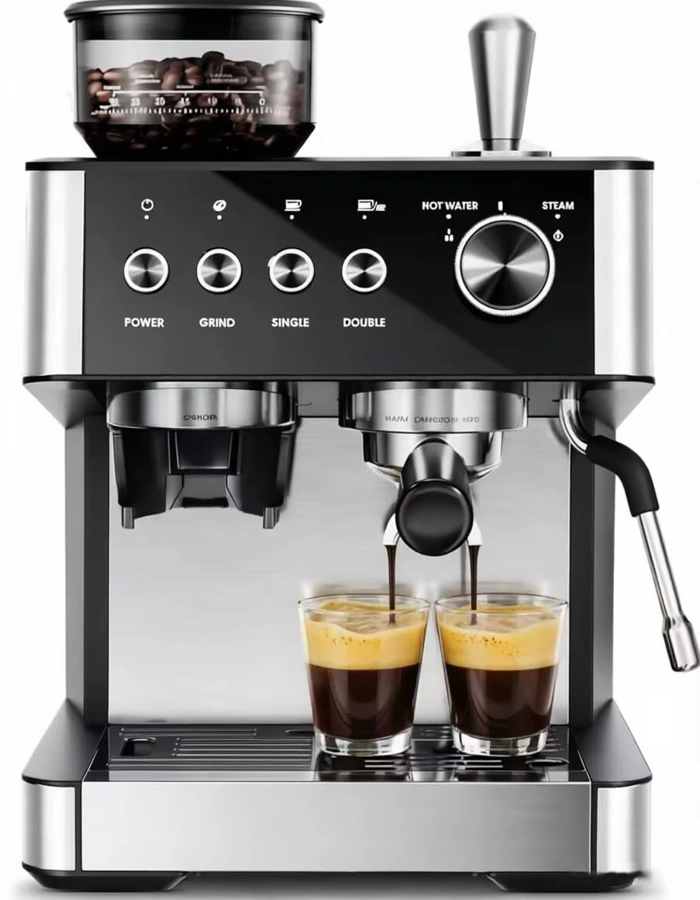
Kismile Espresso Machine with Grinder, 20 Bar, Milk Frother Steam Wand
The Kismile Espresso Machine with Grinder combines a semi-automatic espresso system and built-in grinder in one unit, priced at $279.98. This design reduces the need to buy a separate grinder when starting out, making it easier to control both grinding and brewing without spreading your budget across multiple machines.
The machine uses 20 bar pressure and includes a steam wand for manual milk frothing. This gives you hands-on control over each step: you adjust grind size, dose the portafilter, and texture milk yourself. If you want to learn espresso fundamentals without investing in high-end equipment, this setup offers a practical entry point.
Because the grinder is integrated, counter space stays more compact. You'll still need to dial in grind settings and practice steam-wand technique, so expect a learning curve typical of semi-automatic machines. The built-in grinder also means one less cord and one less appliance to maintain separately.
This machine suits someone starting their first semi-automatic setup who values control and wants to avoid the workflow of a fully automatic bean-to-cup system. It won't match the precision or build quality of standalone espresso machines and dedicated grinders at higher price points, but it covers both grinding and brewing in a single, budget-conscious package.
- ✅ Built-in grinder eliminates need for separate purchase
- ✅ 20 bar pressure and manual steam wand for hands-on control
- ✅ Compact footprint with integrated design
- ✅ Affordable entry into semi-automatic espresso at $279.98
- ⚠️ Learning curve for grind dialing and steam-wand technique
- ⚠️ Integrated grinder may limit future upgrades
- ⚠️ Build quality and precision below higher-end standalone systems
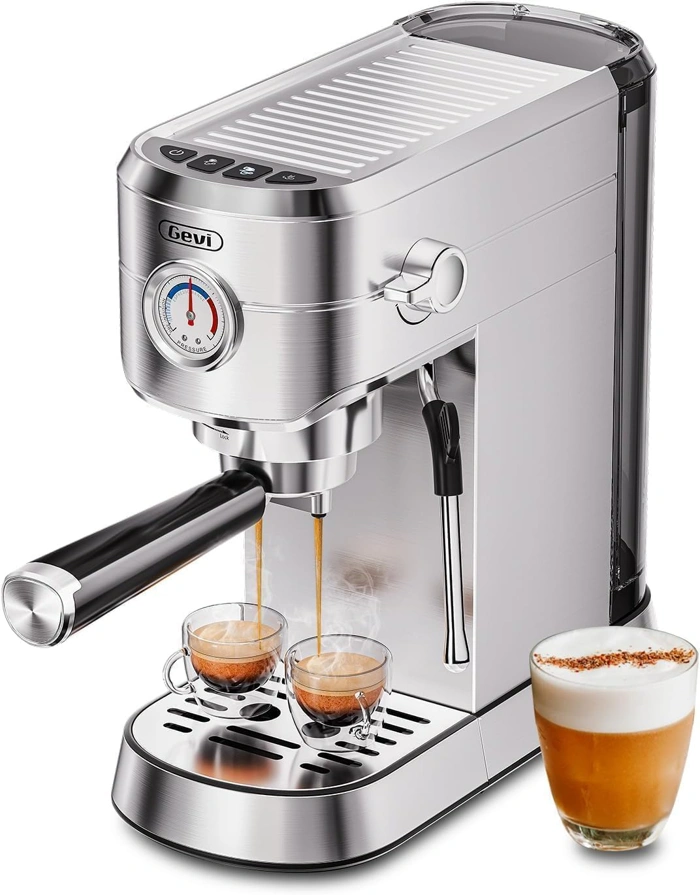
Gevi 20 Bar Compact Espresso Machine for Latte & Cappuccino
The Gevi 20 Bar Compact Espresso Machine offers a traditional espresso workflow in a smaller footprint, making it a practical choice if counter space is tight but you still want manual control over brewing and milk texturing. With a 20-bar pressure pump, it provides the range needed for decent espresso extraction when dialed in properly, though success depends on grind consistency and tamping technique.
This machine requires you to grind coffee separately, dose the portafilter, tamp, and steam milk using the integrated steam wand. That hands-on process gives you control over variables like brew time and milk texture, but it also means a steeper learning curve and more cleanup compared to a fully automatic bean-to-cup system. The compact design fits smaller kitchens, though the water reservoir and drip tray will need regular attention during daily use.
The steam wand allows you to froth milk for lattes and cappuccinos, and mastering the technique takes practice. Expect some trial and error as you learn to position the wand and manage steam pressure for microfoam. The machine does not grind beans or automate the milk process, so plan for a multi-step routine each time you make a drink.
Build quality at this price point is functional rather than premium. The portafilter, steam wand, and controls handle everyday use, but materials and components reflect the budget-friendly positioning. Regular descaling and cleaning of the steam wand and group head will help maintain performance over time.
This machine suits someone who wants to practice espresso technique without a large investment or footprint, and who already owns or plans to buy a capable grinder. If you prefer a simpler, one-touch workflow with built-in grinding and automatic milk frothing, a bean-to-cup system will be a better fit.
- ✅ Compact footprint saves counter space
- ✅ 20-bar pump supports proper espresso pressure
- ✅ Manual steam wand allows control over milk texture
- ✅ Lower price point for hands-on espresso practice
- ⚠️ Requires separate grinder and manual dosing
- ⚠️ Steeper learning curve for brewing and steaming
- ⚠️ More steps and cleanup than automatic systems
- ⚠️ Budget build quality and materials
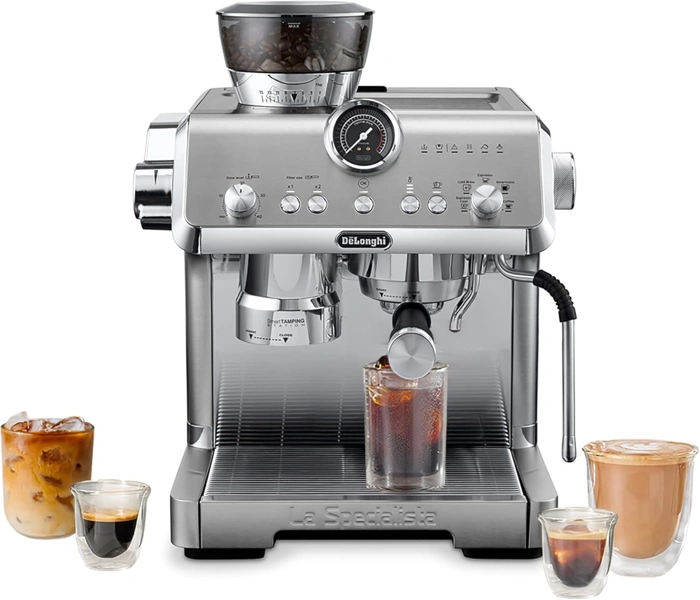
De'Longhi La Specialista Opera Espresso Machine with Cold Brew, EC9555M
The De'Longhi La Specialista Opera Espresso Machine with Cold Brew, EC9555M, sits in a category of its own - neither fully manual nor fully automatic, but rather a guided espresso system with an integrated grinder and workflow assistance. This positioning makes it particularly relevant to the espresso machine vs bean to cup decision, since it offers elements of both approaches.
The Opera includes an integrated conical burr grinder with grind adjustment, giving you control over extraction without needing separate equipment. Its Smart Tamping Station applies consistent pressure, which removes one of the trickier manual steps while still letting you dose and engage with the puck. The dual-heating system maintains separate temperatures for brewing and steaming, reducing wait time between drinks.
What sets this machine apart is its cold brew capability, a feature rarely found in home espresso equipment. This extends the machine's utility beyond hot espresso and milk drinks, making it a more versatile choice if you enjoy cold coffee preparation as well.
The workflow sits between traditional espresso machines and bean to cup systems. You still interact with the portafilter, adjust grind, and control dose, but the machine provides guidance through sensors and automated tamping. This balance suits users who want some hands-on involvement without mastering every manual technique immediately.
At $449.94, the Opera occupies the mid-range price tier. You're paying for the integrated grinder, dual functionality (hot and cold), and the assisted workflow - making it a consideration if you value versatility and some automation without giving up all control over the espresso process.
- ✅ Integrated conical burr grinder with adjustable settings
- ✅ Smart Tamping Station for consistent pressure
- ✅ Cold brew capability in addition to espresso
- ✅ Dual-heating system reduces wait between brewing and steaming
- ✅ Guided workflow balances control and convenience
- ⚠️ Not as hands-on as a traditional manual espresso machine
- ⚠️ Not as automated as a full bean to cup system
- ⚠️ Mid-range price requires commitment to both hot and cold brewing to justify
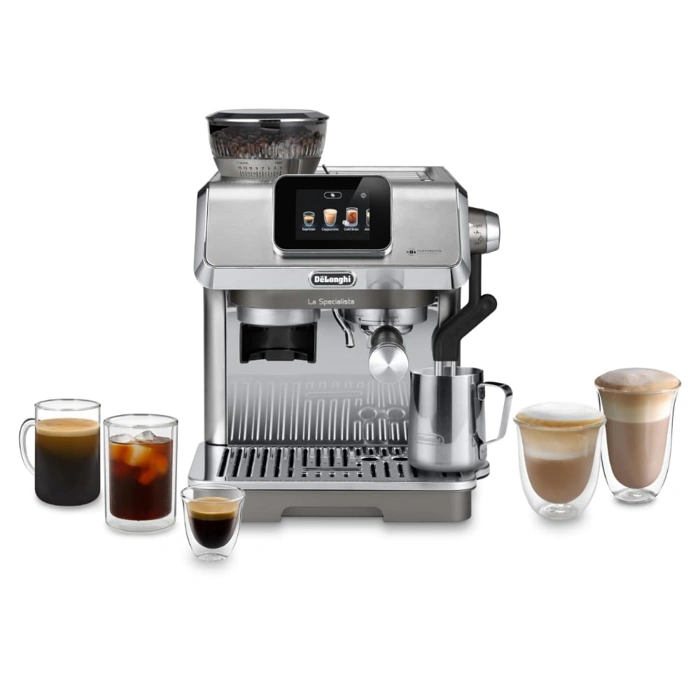
De'Longhi La Specialista Touch Espresso Machine with Grinder, Milk Frother, and Cold Brew
The De'Longhi La Specialista Touch is a premium all-in-one espresso system that combines an integrated grinder, automatic milk frother, and cold brew capability in a single machine. Priced at $699.95, it sits at the higher end of home espresso equipment but delivers substantial convenience for users who want café-quality drinks without manual grinding, dosing, or frothing steps.
This machine uses a touch interface to guide you through espresso, cappuccino, latte, and cold brew preparation. The built-in grinder removes the need for a separate grinder purchase, and the automatic milk system froths and textures milk without requiring you to steam manually. For households that value consistency and speed over granular control of every variable, this setup reduces several workflow steps and reduces the learning curve compared to a traditional espresso machine and separate grinder pairing.
The cold brew function expands the machine's utility beyond hot espresso drinks, making it a year-round option for users who enjoy both hot and cold coffee beverages. The touch controls and automated milk frothing mean less hands-on technique is required, though you sacrifice some of the manual control that dedicated espresso enthusiasts prefer when dialing in shots or texturing milk by hand.
At this price point, you're paying for integration and automation. A similarly capable manual espresso machine and standalone grinder might offer more flexibility and repairability over time, but would require more counter space, more skill development, and a longer workflow for each drink. The La Specialista Touch makes sense if your priority is streamlined daily use, multiple drink types, and minimizing the number of separate tools you need to operate and maintain.
The 4.3 out of 5 rating reflects solid performance in its category. This machine suits users who want espresso-based drinks and cold brew without the manual steps of grinding, dosing, tamping, and steam-wand frothing, and who are comfortable investing in a premium all-in-one system that simplifies the process at the cost of some hands-on control.
- ✅ Integrated grinder eliminates need for separate equipment
- ✅ Automatic milk frothing reduces manual technique requirements
- ✅ Cold brew function adds versatility for year-round drinks
- ✅ Touch interface streamlines workflow for multiple drink types
- ✅ All-in-one design saves counter space versus separate components
- ⚠️ $699.95 price point is a significant upfront investment
- ⚠️ Automation reduces manual control compared to traditional espresso setups
- ⚠️ Integrated design may limit repairability or component upgrades