We may earn a commission when you buy through links on this page, at no extra cost to you. How this works.
You reach for your coffee maker every morning, but you've started wondering if there's a better way. Drip coffee makers promise consistency and hands-off convenience, while pour over advocates swear by the control and flavor clarity their method delivers. The question isn't which one is objectively superior - it's which fits the rhythm of your actual day.
Both methods brew good coffee, but they ask different things from you. A drip machine handles the work while you get dressed or pack a lunch. Pour over demands your attention for a few focused minutes, rewarding you with precise extraction and a ritual that some find calming, others find inconvenient. The gap between them isn't just about taste - it's about time, effort, and how much you want to tinker.
This comparison walks through the practical differences: how long each takes, what the coffee tastes like, what you'll spend upfront and over time, and how cleanup fits into your routine. If you're debating whether to stick with your current drip machine, upgrade to a better one, or try a pour over setup, understanding these tradeoffs will make the decision straightforward.
Use the matching tool first
Start with Better Coffee at Home Checklist if you want to narrow the fit before checking current offers.
What is a Drip Coffee Maker? The Ultimate in Convenience
Automatic drip coffee makers heat water in a reservoir and pump it through ground coffee in a filter basket, delivering hot coffee into a carafe below - all without your attention once you press start. The machine handles timing, water distribution, and temperature control, making it the hands-off choice for consistent batch brewing. Most models let you program a start time the night before, so you wake up to hot coffee without lifting a finger.
This convenience explains why drip machines dominate home kitchens. You can brew 8 to 12 cups at once, keep coffee warm on a hot plate, and walk away while the machine works. There's no pouring technique to learn, no timer to watch, and no risk of uneven extraction if you're distracted by morning routines. The tradeoff is less control over variables like water temperature and contact time, which can matter if you're chasing nuanced flavor from high-quality beans.
Drip coffee makers fit busy households and anyone who values repeatability over ritual. If your priority is reliable coffee with minimal effort every morning, the automatic process delivers exactly that.
What is Pour-Over Coffee? The Hands-On Path to Flavor
Pour-over coffee puts you in direct control of every variable that shapes flavor. Instead of automation, you manually pour hot water over coffee grounds placed in a filter cone, guiding the water's path and contact time to extract exactly the profile you want.
The process starts with the bloom: you pour just enough water to saturate the grounds, which releases trapped carbon dioxide and prepares the bed for even extraction. After a 30- to 45-second pause, you continue pouring in slow, circular motions, keeping the water level steady without flooding or drying out the grounds. Timing, water temperature, and pour speed all influence the final cup.
Enthusiasts favor pour-over because it highlights the coffee's origin characteristics. A steady hand and deliberate pace allow brighter acidity, more defined fruit or floral notes, and a cleaner mouthfeel than most drip machines deliver. The tradeoff is time and attention - you can't walk away mid-brew.
Each pour-over session teaches you how grind size, water temperature, and pouring rhythm affect taste. If you enjoy tinkering and want to taste the difference your technique makes, pour-over offers that direct feedback every morning.
Ease of Use and Time Commitment
Drip coffee makers require little more than filling the reservoir, adding a filter and grounds, and pressing a button. Once started, the machine handles brewing while you shower, pack your bag, or make breakfast. Most models complete a full pot in five to seven minutes without any input from you.
Pour over brewing demands your attention for the entire process. You'll heat water to the right temperature, wet the grounds in a bloom phase for about thirty seconds, then pour in slow, circular motions over three to four minutes. The technique matters: pouring too fast or unevenly changes extraction and flavor. If your morning routine is already rushed or you're making coffee for multiple people, that focused time window can feel like a trade you can't afford.
The patience required for pour over also brings control. You decide the water temperature, pour rate, and contact time, which lets you adjust for different beans or taste preferences. Drip machines automate those variables, which means consistency but less room to experiment. If you enjoy the ritual and have a few uninterrupted minutes, pour over can fit naturally into a calm morning. If you need coffee ready when you are, a drip machine removes the this product.
Control Over the Brew and Taste Profile
Pour over brewing puts every variable in your hands - water temperature, pour rate, bloom time, and flow pattern all shape the final cup. Adjusting how quickly you pour or where you direct the stream changes how flavors extract from the grounds, which is why experienced brewers can coax out bright acidity or deeper sweetness from the same beans. That level of control makes pour over the better choice when you want to highlight single-origin coffee or experiment with different roast profiles.
Drip coffee makers follow a programmed cycle, heating water to a set range and distributing it over the grounds at a fixed rate. You lose the ability to fine-tune extraction on the fly, but you gain repeatable results every morning without thinking about technique. Most drip machines maintain water temperature between 195 and 205 degrees Fahrenheit, which works well for standard medium roasts but offers no adjustment for lighter or darker beans that might benefit from cooler or hotter water.
Taste differences follow these control gaps. Pour over typically delivers a cleaner cup with more defined flavor notes because you can prevent over-extraction in any part of the bed and ensure even saturation. Drip machines can produce muddier or flatter coffee if the spray head doesn't distribute water evenly or if the heating element fluctuates. When you prioritize flavor clarity and are willing to practice your pouring rhythm, pour over rewards that effort. When you need dependable coffee without a learning curve, a quality drip machine gets you close enough for daily drinking.
Initial Cost and Required Gear
Pour over setups can start as low as $25 to $30 for a basic dripper and carafe, but that price rarely tells the whole story. Most pour over brewers assume you already own a gooseneck kettle for precise pouring, a burr grinder for consistent grounds, and paper filters. Add those pieces, and the real entry cost climbs closer to $100 or more if you're starting from scratch.
Drip coffee makers in the same $25 to $40 range are complete solutions out of the box. They include the water reservoir, heating element, filter basket, and carafe. You still need ground coffee and filters, but no specialized pouring technique or extra kettle. Mid-range drip machines with programmable timers and thermal carafes run $50 to $120, while premium models can exceed $200.
The difference comes down to what you already have and what convenience is worth. If you own a kettle and grinder, a pour over dripper is an affordable addition. If you're building a coffee setup from zero, a drip machine delivers everything you need in one purchase, though you sacrifice hands-on control. Budget for the full kit, not just the brewer, to avoid surprise expenses after your first attempt at brewing.
Cleanup and Maintenance
Pour over cleanup is straightforward: rinse the dripper, discard the paper filter, and wash the carafe. Most pour over components are dishwasher-safe, and the entire process takes less than two minutes. Because there are no hidden chambers or heating elements, you can see exactly what needs cleaning.
Drip machines require daily carafe washing and basket rinsing, but also need periodic descaling to remove mineral buildup from the internal water reservoir and heating system. Descaling frequency depends on your water hardness - most manufacturers recommend every one to three months. The process typically involves running a vinegar or descaling solution through a full brew cycle, then flushing with fresh water. Neglecting this maintenance can affect taste and shorten the machine's lifespan.
If you're rushing out the door each morning, pour over offers faster cleanup with no hidden tasks. Drip machines ask for more long-term attention, but the daily routine is still quick. Choose pour over if you want minimal upkeep and full visibility into cleanliness, or a drip machine if you're comfortable scheduling occasional descaling sessions in exchange for automated brewing.
The Verdict: Which Brewing Style Fits Your Life?
The right brewing method depends on how you start your day and what you want from your coffee. A drip coffee maker delivers consistent, hands-off brewing for households that need multiple cups ready at once, making it the practical choice when time is limited and routine matters more than ritual. Pour over rewards patience with cleaner flavor and full control over extraction, fitting mornings when you have a few extra minutes and want to notice what you're drinking.
If your priority is convenience, batch brewing, or serving a family, drip wins. The machine handles timing and temperature while you get ready, and most models keep coffee warm without much effort. Pour over requires focus and a willingness to stand at the counter, but the payoff is a cup that highlights origin character and lets you adjust strength and body with each brew.
Cost and counter space also shape the decision. Pour over gear starts at the price of a single dripper and filters, while even budget drip machines cost more upfront and occupy permanent real estate. Cleanup tilts toward pour over for single servings, though drip's carafe and filter basket add only a minute or two when you're making a full pot.
Neither method is better in every situation. Choose drip if you value automation, need volume, or prefer coffee waiting when you wake up. Choose pour over if you care more about flavor clarity, enjoy the process, and brew one or two cups at a time. Many coffee drinkers end up keeping both: drip for weekday mornings, pour over for weekends when there's time to slow down.
Making a Confident Choice for Better Home Coffee
Both drip coffee makers and pour over methods can produce satisfying coffee at home when you match the tool to your actual routine. If you want consistent results with minimal effort each morning, a drip machine handles timing and temperature for you. If you enjoy a hands-on process and want control over extraction, pour over rewards the extra attention with nuanced flavor.
The right choice depends on honest self-assessment. Consider how much counter space you have, whether you brew for one person or several, and how much time you're willing to spend on technique. Neither method is objectively better - they solve different problems.
Start with the approach that fits your current habits, then adjust as your preferences become clearer. You can always add the other method later if your needs or curiosity grow.
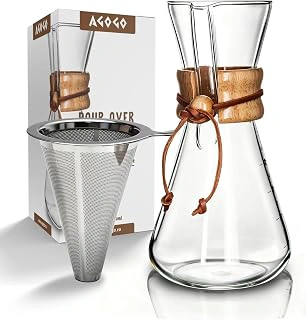
AGOGO Pour Over Coffee Maker Glass Barista Kit with 304 Stainless Filter, 20oz
The AGOGO Pour Over Coffee Maker offers a straightforward entry into manual brewing without requiring paper filters or complicated gear. The kit centers on a 20-ounce glass carafe paired with a 304 stainless steel filter, so you can brew enough coffee for two or three mugs in one session while skipping the ongoing cost of disposable filters.
The reusable stainless filter is the main draw here. It allows more natural oils to pass through compared to paper, which can produce a richer, fuller-bodied cup. You'll also notice more fine sediment in your coffee, which some drinkers enjoy and others find less appealing. The 20-ounce capacity works well for couples or anyone who wants to brew multiple servings without repeating the process.
Setup is simple: place the filter cone on the carafe, add medium-coarse ground coffee, and pour hot water in a slow, circular motion. The entire process takes about four minutes once your water is ready. Cleanup involves rinsing the stainless filter and washing the glass carafe, both of which are easy to maintain over time.
This kit suits someone willing to invest a few extra minutes each morning in exchange for more control over extraction and flavor. The design is minimalist, the materials are durable, and the stainless filter reduces the need to stock paper filters. If you value hands-on brewing and want to avoid recurring filter purchases, the AGOGO kit provides a practical balance of simplicity and quality at around $26.59.
- ✅ Reusable 304 stainless steel filter eliminates paper filter costs
- ✅ 20-ounce capacity brews multiple servings in one session
- ✅ Simple, durable glass-and-steel construction
- ✅ Allows natural coffee oils through for fuller-bodied flavor
- ⚠️ Stainless filter produces more sediment than paper
- ⚠️ Requires four minutes of active pouring and attention
- ⚠️ Manual process may feel slower than automatic drip
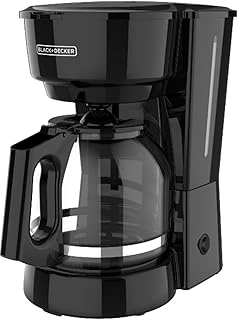
BLACK+DECKER 12-Cup Coffee Maker, Easy Pour, Non-Drip Carafe, Vortex Technology, Black
The BLACK+DECKER 12-Cup Coffee Maker offers a straightforward path to consistent coffee when you need minimal involvement in the brewing process. Its Vortex Technology spreads water evenly over grounds, reducing the uneven extraction that sometimes happens with basic drip machines. The glass carafe features an easy-pour spout designed to reduce drips along the rim, which helps keep countertops cleaner during busy mornings.
This machine includes programmable settings, so you can load it the night before and wake up to ready coffee. The 12-cup capacity works well for households that go through several mugs each morning or need to brew enough for guests without starting a second pot. The control panel is simple, with a few buttons and a digital clock that doubles as a brew timer.
The non-drip carafe design minimizes mess when pouring, though you still need to tip it deliberately to avoid splashing. The warming plate keeps coffee hot for up to two hours, which is useful if you drink slowly but can lead to a slightly bitter edge if the pot sits too long. Cleanup involves rinsing the carafe and swapping out the paper filter basket, both quick tasks that take less than a minute.
This drip maker suits people who value automation over ritual. If you want coffee waiting when you enter the kitchen and prefer not to stand over a kettle or manage a pour-over cone, the BLACK+DECKER handles the work. It won't deliver the nuanced flavor control of manual brewing, but it produces dependable results with almost no attention required. The price point makes it accessible for anyone shifting from instant coffee or replacing an older machine that stopped working reliably.
Check availability on Amazon to see current pricing and delivery options.
- ✅ Vortex Technology spreads water evenly for consistent extraction
- ✅ Programmable timer lets you wake up to ready coffee
- ✅ 12-cup capacity handles multiple servings without rebrewing
- ✅ Easy-pour carafe reduces countertop drips
- ✅ Simple controls and quick cleanup
- ⚠️ Warming plate can create bitter notes if coffee sits too long
- ⚠️ No manual control over brew temperature or timing
- ⚠️ Requires paper filters as an ongoing cost
Quick Decision Checklist: Which Method Fits You?
- Choose drip if you want hands-off brewing and consistent results every morning
- Choose drip if you make coffee for multiple people at once
- Choose drip if you need programmable timing or automatic shutoff
- Choose pour over if you have 4-5 minutes to focus on the brew
- Choose pour over if you want direct control over flavor and extraction
- Choose pour over if you enjoy the ritual and don't mind the learning curve